Author: Skeptifist

  • For Whom The Bell Tolls

    For Whom The Bell Tolls

    (There is no Hemingway in this post.)

    • I mentioned, I think, going to Tool last week.
    • I went to Dallas, saw them with my sister and brother-in-law.
    • Was a heck of a show. Not a single unwanted song.
    • Which is always awesome.
    • How many times have you gone to a concert they played a song and you thought either, “What? This one? Ugh,” or, “What the heck is this song?”
    • Almost every one, right?
    • Not all bands can pull that off.
    • Metallica, for instance, has never let me down.
    • In fact, the answer to the “best concert I’ve ever attended” question you didn’t ask would be a Metallica show.
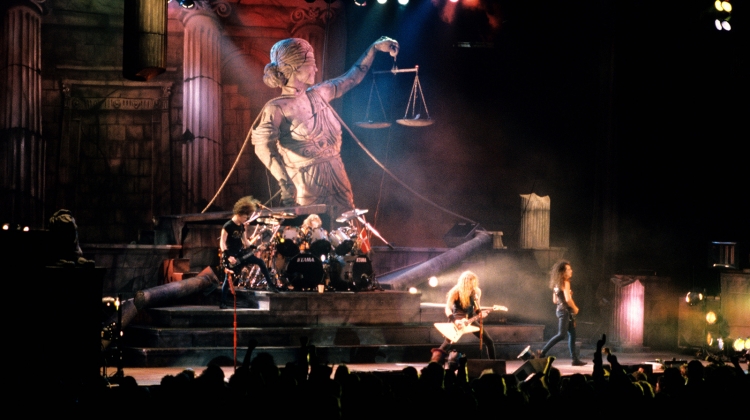
    • I saw them in 1989 (omg, old) at the Pavilion on the And Justice for All … tour.
    • Was the first concert I’d gone to without adults, and I can’t remember who all went other than my buddy Steve because we were the only two who stuck together.
    • Whoever handled the set-up for the Pavilion was obviously not familiar with Metallica, because they set the floor up with rows of folding metal chairs.
    • Queensryche was the opener.
    • We arrived early enough to worm our way to the first 10 or 12 rows.
    • While the opener played, the whole crowd chanted “Metallica” over and over again, which, if you’re Queensryche, had to stink.
    • Then the set-change hit and the place got restless.
    • People started pushing forward, crowding the aisles.
    • Soon as the lights went out for Metallica, the folding chairs became a sliding sea of metal foot traps.
    • You had to push to keep people off of you, fight to keep your feet from getting sucked down into the pincers of chomping chair legs.
    • We ended up standing on two chairs that had somehow managed to stay on their feet, right on the edge of the mosh pit, a promontory over a maelstrom of flailing bodies.
    • Steve kept pushing people back into the pit with his foot.
    • And Metallica played all our favorite songs while the statue of Lady Justice fell to pieces on stage.
    • Was pretty glorious, all things considered.
    • They sounded the best when I saw them at the BOK center in 2018.
    • Bunch of “old” dudes who still got it.
    • They are all a decade older than me. I use them as my “what can an X age person still do” barometer.
    • I have seen them eight or nine times.
    • I’ve lost count. Might be more than that, but not less.
    • That’s my band. I’ll go see them until they stop playing. Or the tinnitus wins.
    • I mean, I got kicked out of my ninth grade English class for wearing one of their shirts.
    • To combine age-related issues with today’s theme, which is concerts … I tested out four different kinds of ear plugs at the Tool show.
    • Flare Audio Isolates, Eargasms, Loops, and cheapo foam ear plugs.
    • My tinnitus is so bad when things get loud, all I hear is a buzz.
    • The Loops were the winners, by far. Did the best job of straddling the line between muffled and hearing, and kept the buzzing to a minimum.
    • And since I just did a product review, it’s probably time to stop.
    • Have a Wednesday.

    (Image borrowed from Getty Images; thanks, Google search!)

  • Cul-de-sac

    Cul-de-sac

    Cul-de-sac

    Jim didn’t trudge on his route. Trudging might indicate he didn’t enjoy his job. He loved the walking, the fresh air, the wind, sleet, rain and snow. He even didn’t really mind the dogs. Most of all, he loved the solitude and the freedom.

    He didn’t miss desks. No TPS reports. No micromanaging or awkward break room conversations. He didn’t even mind the uniform, and the bag slung across his chest with its sturdy leather strap was the best he’d ever owned.

    He smiled on the inside as he walked, headphones on, a special AI-curated Halloween playlist buzzing in his ears. Around him, the blustery wind shook the trees, streets still damp from earlier showers. There was the promise of a cool evening, the air tasted clean and crisp. Jim breathed in as much as he could, let it out in a slow, steady trickle.

    He made the corner of 55th St., deposited a small box on the Taylor’s doormat that looked like a street grate with a creepy clown beneath it. At the Redman’s, he dropped letters through the slot, along with a couple Milkbones for Fletcher, their Jack Russell who bounced up and down behind the door, intermittently peeking at him through the door’s window panes.

    Ahead of him, kids in costumes raced from porch to porch, little cabals of super heroes and monsters. He noticed they avoided the house at the end of the cul-de-sac. Mr. Smith’s house, a boring, red-brick home with weathered black shutters, black trim, and a small front porch full of cobwebs, curtains behind windows occluding any view of the inside. Never a car in the driveway, but the lawn was always mowed.

    He’d never actually seen Mr. Smith, now that he thought about it. And Mr. Smith only ever received the weekly junk mail. Never a bill. Never a letter. No postcards or packages. If anyone asked, Jim would be hard-pressed to remember ever stepping onto Mr. Smith’s porch, even to deliver the Wednesday coupons.

    Jim stopped and watched the children avoid it. They didn’t seem to discuss avoiding, but their groups skipped from the house on one side of the street straight to the other. It made him laugh, and remember Halloweens from his youth. There were always houses you skipped, always dark streets you sprinted rather than strolled.

    He trooped up a driveway, filtering the letters in his hand for the Moyers, the last house on the right before Mr. Smith’s. He dodged a gaggle of big kids in last-minute costumes before stepping onto the porch. Ms. Moyer, whom he’d shared many a superficial greeting, smiled at him. She wore a long, black sparkly dress that pooled on the ground around her feet, a tall, pointy witches’ hat on her head. She opened the door as he extended her mail.

    “That is a nice costume,” she said.

    He smiled. “Worked hard on it. Totally authentic.”

    She took her mail from his hand, replaced it with a full-sized Snickers. He smiled and nodded, thanked her.

    “Make good choices!,” she said as he walked off across her lawn, slipping the Snickers into his jacket pocket.

    As he stepped from the curb, he reached in his bag for the next batch of mail. On top was a weathered looking No. 10 envelope, corners bent, with a diagonal crease running from a top corner to the opposite bottom. Mr. Smith’s name and address were scrawled across the front, almost from one side to the other. No return address.

    Jim stopped in the middle of the street staring at the letter. He had no memory of loading it into his bag.

    “Huh,” he said, to no one in particular. He looked at the unremarkable house. Behind him, to the west, the sun had finally slipped below the horizon, turning the sky dim, transforming the trees to silhouettes, houselights to beacons of orange. The wind trashed the trees, the sound of crashing leaves almost louder than his music.

    He headed up Mr. Smith’s driveway, scooted down the sidewalk, onto the porch, and lifted the hinged lid to the mailbox, which screeched as it moved. As he stepped back, he noticed the front door open behind a glass storm door. A tall, thin man with a long, sharp nose, bright blue eyes behind round, black wire-framed glasses stood staring at him. The man’s black suit, white shirt and black tie made Jim think of a hitman, or an undertaker, maybe the owner of a bookstore. The man behind the glass smiled, of sorts. It didn’t reach his eyes or show any teeth.

    He creeped Jim out.

    The storm door pushed open. Another not smile.

    “Jim, yes?”

    Jim nodded.

    “We’re in a bit of a … predicament. Do you think you could come inside and help us?”

    The man stepped out onto the porch, holding the door open with his back, motioning Jim inside with an expansive sweep of his left arm. Jim stared at his hand, then looked back to the fake smile.

    “What sort of help do you need?”

    “I’ll explain as we go, but trust me, time is of the essence, and the safety of the world is at stake.”

    Jim exerted will to not roll his eyes, thought maybe Mr. Smith was delusional and might be in actual need of help. That or it was a heck of an elaborate Halloween prank. Despite the quiet, voice saying, “Dude, what are you doing?” in the back of his head, Jim stepped into the house.

    The man closed the door behind them.

    Jim glanced around, noticed a reddish orange glow coming from deeper in the house, but the rest of the lights were out. The air smelled of sweat and incense, and as he shuffled his feet, the scuffs echoed on the walls.

    “If you’ll come with me,” the man said, then strode toward the glow. Jim took a breath and followed. They passed through what Jim assumed was the living room, complete with and old, cold, rock fireplace and no discernible furniture. They stepped through a sliding glass door and down into a high-ceilinged, rock-walled room.

    In the middle of the space, five men sat at equal distant points around a glowing red circle. One of the men wore a brown terry cloth bathrobe. Another, what looked like graduation regalia. A third wore a blue and white Hawaiian shirt with giant hibiscuses all over it. The fourth, khakis, loafers and a muted pink polo shirt. The fifth wore a black suit, white shirt, black tie, and looked the twin of the man next to Jim. All were thin, almost gaunt, with sunken cheeks and dark eyes. They murmured together in an almost discordant chant.

    One of them, the one in the bathrobe, appeared somehow worse than the others, his skin pale, almost gray. His body shuddered as he breathed.

    In the middle of the circle stood a figure, vaguely human in shape, but its lines blurred, shifted as Jim stared at it. White eyes in a flaking black face stared at him through a soft column of pale red light.

    Jim’s brain screamed at him, gibbering like a monkey in a zoo. He took a step back. Another.

    “Jim, what do you know about magic?”

    Jim swallowed to wet his throat. “Other than it doesn’t exist?”

    The man in the suit gave the smile again. “That,” he said, and pointed to the thing in the circle, “is unimaginable evil from beyond our world. We have it contained, have had it contained, for decades. Were it to escape, our entire existence would be doomed.”

    Jim, feeling a tad steadier, nodded along.

    “We five are all that stand between it and our collective oblivion.”

    Feeling better still, Jim said, “Sure. And it looks like you’re doing a great job. I’m going to go ahead and get back to my route.”

    “Do you see the ill-looking gentleman in the bath robe?”

    Again, Jim nodded, considered himself master of witty repartee.

    “That is Mr. Smith, the owner of this domicile. At any moment, perhaps his next breath, he is going to pass from this world, and the circle will be broken. We have moments for someone to assume his spot, to maintain its integrity. Will you help us?”

    Jim nodded, then, “Wait, what?”

    “We need you, Jim, to help us save the world.”

    “Who are you people?”

    “We are masters of the arcane, stewards of the forbidden knowledge, keepers of the gates.”

    “And what happens if Mr. Smith dies?”

    “You are being obtuse. Assist us or … calamity.”

    “You are a bit melodramatic.” Jim stared at the thing in the light, considered his options, considered the absurdity of the moment. “What do I have to do, and how long is this going to take? I have to finish my route.”

    The man in the suit smiled, an actual smile, and his shoulders dropped. He said, “Open your mind, and hear my words. Mark them to your memory for all time, and may your will never falter,” and then the man’s words shifted to a language Jim had never heard before, not even in grad school. They circled and swooped round his brain, behind his eyes, and down this throat, through his body, and emerged from his mouth, filling in the proper spaces left by the men around the circle.

    The man in the suit listened to Jim for a moment, then turned and walked around the circle to his twin. He met Jim’s eyes, motioned to Mr. Smith and his dirty bathrobe.

    “Quickly, he hasn’t much longer. Be ready to assume his place.”

    Jim stepped behind Mr. Smith, and as he did, he realized the words coming from his mouth synced perfectly with those of Mr. Smith. He tried to pause to listen, to be sure of what he was hearing, but the sounds didn’t stop, did not respond to his will.

    He looked across the circle to the man in the suit. The man stepped forward and sat down, into his twin, the two figures becoming one. Jim tried to say, “What the h …” But his words could not overcome the murmured spell.

    And then Mr. Smith collapsed, backward, his body withering to a husk in moments. Jim considered running again. The man in the suit motioned for Jim to sit.

    Jim lowered his mail bag to the ground, sat, cross-legged.

    The thing in the column loomed over him, its burning skin flaking off, falling ash, which Jim could now see piled along the edge of the circle in ebony drifts. He looked up, into the deep, white, endless eyes of the thing, watched as another piece of its face peeled off, floated down like a black feather, back and forth in an infernal wind. The ash settled on Jim’s forehead. It felt warm and soft, then hot.

    Jim tried to scream. The thing looked down at Jim’s mailbag, which sat across the boundary of the circle, and smiled an endless white smile.

    The end of the world screamed. Jim heard the sound in his soul, with his heart. The murmured words vanished from his mind, and he watched as the thing lashed an arm at the guy in the pink polo shirt. The man smashed into the wall.

    Jim grabbed his mail bag and ran. He ran for the temporary safety, solitude and freedom of his route. He ran from the house at the end of the cul-de-sac that no one visited. He ran from the ash and screams and smoke.

    And for the first time since becoming a mail carrier, he wished he’d kept his desk job.
  • Lost Words

    Lost Words

    Sometimes, I think about all the stuff I’ve written that’s lost to the ether.  

    Last week, I thought of a short story I’d written for the Tulsa Library Adult Fiction contest way back in 1999 called No Kisses for Darla. It was about a bartender with a cursed ankh necklace. I threw it together in a couple of days, entered it, warts and all, and got what amounted to third place out of 100+ entries.  

    It was my first fiction submission ever. 

    It would take another 18 years before I’d try again. 

    I didn’t get to attend the awards ceremony because I had to go to a wedding in Vegas, but they assured me it would be bound with the other winners and set upon the shelf in the Tulsa Central library. I always assumed I’d get by there and check it out, but I didn’t. 

    Over the years, media storage has changed. I’m pretty sure I had the original stored on a Zipp disk, but the disk is gone.  

    Last week, I tried to find out if the story was still in the library. I’d like to have a copy, after all. As it turns out, it likely isn’t. They only keep those a couple of years.  

    So that story is lost. I remember being kind of proud of it. I had a lot of match cuts between scenes, and played with two concurrent (past/present) narratives. Alas. 

    And then there are my movie review columns. Eleven years at 1500-2000 words a week, times 50 weeks per year equates to somewhere between 825,000 and a million words. I probably have saved maybe 20 columns in my cloud. I didn’t keep clips (back in the day when you cut your stories out of the newspapers or magazines with scissors and kept them in a fancy manila folder in a cheap metal file cabinet).  

    All those words, lost. 

    Some of them were even good, too.  

    I am somewhat lackadaisical about bylines. Had a few, am not personally impressed by having done so. 

    Still, it does sorta bother me that they’re gone. Urban Tulsa went out of business, its website shuttered alongside it. We tried to save the archives, but couldn’t come up with the funds.  

    All those lost words, all that lost work. 

    When I’m dead and gone, all that remains of me will be the words I’ve committed to “paper” and to the hearts and minds of those left behind. Maybe I should’ve taken more care to preserve those things, maybe it’s a more realistic view of our place in history. Fleeting. Dismissed.  

    I would’ve liked to have read that story again.  

  • The Toddler Dance

    The Toddler Dance

    • Yesterday, on the Internet, I saw a video of a mom coming out of a 10-day COVID-19 self-isolation.
    • Waiting for her was a toddler doing what can only be described as a happy dance, arms raised, feet and legs pumping up and down.
    • When she saw her momma, she ran to her and threw down a whole-body hug.
    • Which made me remember when the Teenager was a wee lass.
    • Those whole-body hugs toddlers dole out are literally the best feeling in the whole world.
    • And remembering them made me sad.
    • Because she doesn’t do that anymore.
    • Now days, I get that side arm, half-hug/half lean away thing.
    • I’ll take what I can get, obviously.
    • There are a lot of teenagers who want nothing to do with their dads.
    • But … hugs recharge your batteries.
    • Or for me they do, anyway.
    • Did I just admit to being a hugger?
    • Strike that from the record, please.
    • A friend of mine has a couple of daughters, one in college, one at Booker T.
    • He likes to say, “These days won’t last.”
    • Life is melancholy, sometimes.
    • For all the chaos and frustration, it can still be deep, meaningful, and beautiful.
    • You don’t get the good without the bad.
    • So savor …
    • Ugh. I just turned into a self-help meme.
    • Suck the marrow out of life, kids.
    • I read that somewhere.
    • In a book.
    • With pages.
    • And speaking of pages, I’m at about 160-ish in To Kill a Mockingbird.
    • I’m reading it slowly, trying to savor it, I guess.
    • No more than a couple chapters a night.
    • I admire her patience as an author.
    • Giving over chapters and chapters to character building with the plot just kind of slowly building in the background.
    • I don’t have that kind of patience. More of a pulp writer, I suppose.
    • I’m getting into the weeds.
    • Need to be deliberate about finding more ways to slow things down a bit.
    • Here it is Friday and all I can remember about the week is homework with the Teenager and the condensation drain line on the A/C stopping up and flooding the bedroom.
    • Have I told you guys the saga of my move?
    • No?
    • Well, best not to start now.
    • Thematically, it’s akin to Tom Hanks’ The Money Pit.
    • Kinda.
    • “These days won’t last.”
    • Okay, let’s link out on a high note.
    • The benefits of running just one mile every day.
    • Today’s working/writing soundtrack.
    • Plan your Halloween-season reading list accordingly.
    • Eight ways to improve your mental performance in the morning.
    • Also, still savoring Ted Lasso.
    • Roy Kent is my spirit animal.
    • And that’s all I’m gonna say about that.
    • Try to enjoy your non-90-degree weekend!
  • Lasso Your Monday

    Lasso Your Monday

    • I’m Mondaying through my Monday.
    • Not like last Monday, but …
    • Had half the bullets written and realized, no, dude, you can’t say any of that.
    • I mean, I could, but consequences.
    • Definitely not something Ted would do.
    • We started watching Ted Lasso this weekend, and it’s pretty spectacular.
    • Almost literally every line in that show is gold for every character.
    • And the actors nail them every time.
    • There is an abundance of NSFW language in it.
    • If that offends you, you’ll want to skip.
    • But man, I have not laughed at a show like this in … decades.
    • Because I don’t laugh.
    • That would be breaking character.
    • I don’t know what happens in the second season, but I’m already certain it deserves every accolade it can get.
    • If it weren’t Monday, I’d be home on the couch bingeing the rest of the series.
    • What would our world be like without all our creative people?
    • No Ted Lassos.
    • No movies, no stories.
    • No books or songs on the radio.
    • No fancy interior design schemes.
    • Or elegantly designed homes to decorate.
    • No dances to watch in a darkened theatre.
    • No colorful murals on your favorite city walls.
    • The list of things that make our lives worth living, that enrich and enhance, distract and dissuade, is so long I can’t even come up with all the categories.
    • I’m saying I’m thankful this morning for creative people, no matter their medium.
    • And I’m blaming Ted Lasso.
    • And his da … rned optimism.
    • Funny, then, I’d come across this specific article at this specific time.
    • (It’s like they are reading my word document in real time.)
    • 1984.
    • Panopticon.
    • I mean, they can’t be, right?
    • What kind of societal trust would there be if literally every word we said in any medium was monitored?
    • And what is the point of that monitoring?
    • And why do we volunteer for it?
    • I’m tripping over the line again.
    • But maybe Monday mornings can use some more deep thoughts about modern society.
    • Or maybe we should stick to the superficial.
    • Like James Bond.
    • We watched the trailer for the new Bond movie that allegedly opens in a couple of weeks.
    • The Teenager thought it looked great, so she suggested we do a Daniel Craig Bond movie marathon over the weekend.
    • (It sounds like all I did was watch stuff.)
    • There were bike rides. And a birthday dinner.
    • I did things.
    • Do things on your Monday.
  • Breakfast Music

    Breakfast Music

    • I had the thought, briefly, I’d make today’s list literally a playlist.
    • Just a bunch of YouTube links to songs you could click one after another.
    • I suppose I could probably make a YouTube playlist for you, and share the link.
    • But then you’d know my YouTube handle and we would not be maintaining separation of work and self.
    • Still …
    • Making and sharing a playlist is the modern day equivalent of making a CD for someone.
    • Or, to go all ‘80s on you, a mixtape.
    • I assume the “kids” these days make and share playlists.
    • It was a big way of expressing ourselves back in the day.
    • For me, anyway.
    • Like writing with someone else’s words.
    • Hoping to express a mood, feeling or intention to another person purely through melody and chords.
    • Giving someone a playlist/CD/mixtape is asking someone else to see you, or letting them peek inside, and perhaps a small ask for affirmation.
    • “Oh, yeah, man, that song was dope.”
    • Slang.
    • Music’s on my brain because every morning, driving the Teenager to school, we listen to that weird shared playlist I mentioned a couple weeks ago, the one that skips from Muse to Billie to Imagine Dragons to Fitz and the Tantrums to The Chainsmokers to Metallica.
    • That was this morning’s drive.
    • Well, I did skip Fallout Boy.
    • When I find out who in my house is listening to Fallout Boy, there’s going to be a reckoning.
    • I am also not a fan of Imagine Dragons.
    • I would not take a free ticket to go see them.
    • The girls can go without me, is what I’m saying.
    • Maybe … and that train of thought left the station.
    • Seriously. Answered a Teams chat and I now I have no idea where I was going.
    • Typical, right?
    • The not knowing where I’m going part, not the Teams chat.
    • Teams has been my favorite work thing to come out of the pandemic.
    • Well, and TCC Today, obvs.
    • So where do you stand on fast food breakfasts?
    • I told someone my all-time favorite fast food breakfast was the BoB from Whataburger (sausage, not bacon).
    • Because what’s not to like about all that greasy diner food with Whataburger magic cheese?
    • Yes, yes, I’m too old to eat like that.
    • I mean, I haven’t had one of those in over a year, so …
    • But holy cow it sounds amazing right now.
    • And there’s a Whataburger right across the street …
    • Have a great weekend, gang.
  • Slapping Pages

    Slapping Pages

    • I have never been comfortable using most slang.
    • Even back when I was a kid, I never used skater speak.
    • Other than “dude.”
    • I still address most people as “dude.”
    • (No gender implied, obviously.)
    • (But certainly not in the ordained sense, either.)
    • When I see certain slang used in headlines, it makes me … cringe.
    • Which the kids would say, “is cringe.”
    • Or something.
    • I’m not quite clear on the usage.
    • The one that started me off on this language rant is “slaps.”
    • As in, “And yes, Dev Patel slaps.”
    • That was a sub-headline on Lithub.
    • Made my left eye twitch.
    • (Always the left eye that’s twitchy.)
    • I mean, I get it.
    • You can’t really be a language purist.
    • Language is a living thing.
    • It changes minute by minute, from people to people, person to person.
    • But there’s that fine line between evolution and …
    • Looking at someone and thinking, “Did you mean that for real, or are you using it ironically?”
    • I dunno. It’s probably just me.
    • After all, I get embarrassed for characters in movies.
    • That headline made me embarrassed for whoever wrote it.
    • It could also just be the feeling of outside you get when you see a certain demographic using language you don’t.
    • Inspires you to feel … other.
    • This makes me think that studying language would be a cool profession, especially in a sociological sense.
    • But can someone do that anymore?
    • Does higher ed push that kind of thing, or is the end goal how economically productive they can make a person?
    • Just posing the question. Don’t freak out on me.
    • Speaking of Dev Patel … I still haven’t seen The Green Knight, but I keep hearing great things about it.
    • It’s on the List.
    • Over the holiday weekend, I spent one of my days reading on the couch.
    • Read a real book (not Kindle) cover to cover, in fact.
    • I’ve been stumbling around from book to book trying to find a sticking place for months.
    • Took a page turner to do it.
    • It was amazing to me how relaxing that was, once I got over the “you’re wasting a whole day reading” guilt.
    • Literary Hub may be my favorite site to have stumbled upon in years.
    • If you’re into the books, anyway.
    • When I say books, I mean fiction.
    • I don’t do a lot of non-fiction reading unless it’s research for something I’m writing.
    • “Research.”
    • I read to go away, to relax, to experience a different perspective, and because I crave stories.
    • If there were a Question of the Day place around here, that’d be today’s question:
    • “What do you crave?”
    • “What do you need?”
    • Or, perhaps slightly less risky, “What’s the last book you read in one day?”
    • (And if you’ve never read a book in one day, well, you’re missing out.)
    • Have a Wednesday, people.

    I write these lists for work three times a week, so they’re sanitized for work audiences. Still, kinda fun to do.

  • The Law of Unintended Movie Mondays

    The Law of Unintended Movie Mondays

    • What is happening.
    • That’s more rhetorical as I’m not really asking.
    • I don’t expect you to answer, but a greeting of some sort on a Monday morning seems … proper.
    • I’d ask you if you were sitting in my office. Or if we were sharing a phone call.
    • Or a Teams chat.
    • Holy cow, Teams.
    • I still love Teams. Best collaboration tool I’ve ever used professionally.
    • Don’t call me on my phone. Call me on Teams, is what I’m saying.
    • And by call, I mean send me a chat message.
    • Talking is the worst.
    • Watched Reminiscence Saturday night.
    • Meh.
    • Trying too hard to be sci-fi Chinatown.
    • Makes me wonder if Noir is dead.
    • Setting was awesome. Characters were fine.
    • Movie was meh.
    • Someone gave me a hard time last week.
    • They said something like, “You went from movie critic to ‘it was okay.’”
    • After doing the movie critic thing for 11 years, I quit cold turkey.
    • I debating coming back to it.
    • Even started a blog.
    • Reviewed like, two, maybe three movies on the blog.
    • Quit again.
    • Film criticism seems outdated and unnecessary.
    • I wrote my Master’s thesis on film critics, mind you.
    • But it’s hard to compete with a Rotten Tomatoes rating.
    • Film criticism has been democratized.
    • I think if there are any viable film critics left out there, it’s only because people like them for their voice.
    • And it trips hard into gatekeeping.
    • “If you don’t like such-and-such movie, you clearly don’t know anything about movies.”
    • Bah. Watch whatever you want. Like whatever you want.
    • If you need an opinion before you commit, find someone you know who has similar tastes.
    • I have managed to get the Teenager turned onto movies other than Marvel recently.
    • I employed Mr. Hanks, showed her The Terminal and Catch Me If You Can back-to-back.
    • Last night, she said, “Hey, let’s watch a movie.”
    • The wife and I were stunned because she either doesn’t want to watch movies, or only Marvel movies.
    • “Okay, what do you want to watch,” I said.
    • “I don’t know. You pick. You’ve done a good job picking movies lately,” she said.
    • So I threw on The Adjustment Bureau (which is not Tom Hanks, obviously, but we’d talked about watching Stillwater all weekend, so a Matt Damon flick the kid might watch seemed in order.)
    • Movie Monday, I guess.
    • Before we get past that, however … Tom Hanks has made a truckload of good movies.
    • He is a national treasure.
    • You guys follow his socials, right?
    • Totally would have dinner with Tom Hanks.
    • I really, really did not mean to only write about movies today.
    • Gonna be a hot week.
    • Do your exercise indoors?

    Disclaimer: I write these for work. Figured I’d get some extra mileage out of them. But some of it won’t make sense here. What you gonna do? Edit? Pssh.

  • Holiday Lights

    Holiday Lights

    (unedited)

    The little gray plastic tab locking the screen in place didn’t want to cooperate. Connor stopped, glanced back over his shoulder. The loud voices seeped through the walls, beneath the small crack between the bottom of his door and the carpet, into his chest.  

    The cold wind rushing in from outside chilled his skin, a welcome respite from the heat of the house. A hint of fireplace smoke tickled his nose, the air otherwise crisp and clean.  

    The tab pulled loose. He started on the last one, bottom of the window’s left side.  

    The yelling from the front of the house stopped. Then stomping footsteps. The slam of the front door.  

    Then a louder voice, gruff, harsh, gravelly: “Merry Christmas.” 

    She’d gone, then.  

    He slid the window closed, moving slow and quiet, and sat back on his bed. He reached for The Swords of Lankhmar on his bedside table with his left hand as he pivoted, brought his legs up, settled them in place, and opened the book. He could almost read from the ambient light off the snow. But not quite. 

    He reached behind his head and flicked on his reading light, a flashlight with a long, flexible neck he’d duct taped to the back of his headboard. It created a small pool of wan yellow light you couldn’t see under his door from the hallway.  

    He tried to read, but the words fell away like water through fingers, thoughts a whirl of worry and anticipation. He wondered why they were fighting this time, on Christmas Eve of all nights. His favorite night. Usually. 

    He focused on the words.  

    Heavy footsteps down the hall, toward his door. They stopped, and he reached back to the flashlight switch, poised his fingers above it. The steps left, followed by the clicking of light switches and the flush of a toilet. A smoker’s cough, then the creaking of a bed.  

    He realized he was holding his breath. He waited 10 minutes. Then 20. He looked to his digital clock, which told him he couldn’t count, that it’d just been five minutes, so he started watching the red numbers climb up, minute-by-minute. 

    Time slowed, but Connor’s mind raced, a mix of where-was-she and what’s-under-the-trees, of guilt and excitement. He laid there, staring at the ceiling, imagining the floor he couldn’t see, where he’d left his rain boots, his coat. He planned his movements in order.  

    The house settled into its small-hours rhythm, creaking slightly in the wind, the heater kicking on and off, big, slow, warm breaths. 

    He waited and tried not to look at the clock’s glowing numbers. Then he gave up and climbed from his bed, going through the rehearsed motions. Jeans first, then socks, boots, coat, but not gloves. Back at the window then, he eased up the bottom half and applied pressure to the bottom middle of the window screen. It popped loose. He caught the bottom edge, pushed it the rest of the way out of its track, and lowered it to the ground. 

    Connor climbed through and down, to the snowy flowerbed beneath his window. He walked toward the middle of the yard with careful steps, the top layer of the icy-snow crunching beneath his boots. After 20 steps, he stopped and pulled in as big a breath as he could, then let it out in a flume, pretending himself an ice dragon. The stars twinkled overhead. The breeze whisked away some of the tightness in his chest.  

    North, across the big, winter-barren soy field, past the trailer park at the river’s edge, across the river and up the side of the rocky, steep hill, slow-moving lights of cars pulled across the distant highway. He imagined climbing the rocks, running through the trees topping the hills. He had a dark cloak, longbow, leather pack, and a sword on his hip. Running off to meet the elves. 

    There weren’t elves. He knew that. But elves in the woods probably didn’t worry about arguing parents. If there were elves in the woods, and they wanted him to go, he totally would.  

    Connor took another gulp of cold air and looked back to the stars. Sometimes, standing alone in his backyard as he often did, he’d see a comet. Once, he watched a big blue one travel across the sky, tail dragging behind it, fast, but slower than he thought a comet should move.  

    He thought about going to look for her. He’d done it before. Often. Sometimes, she’d just be laying across the back seat of the station wagon. Sometimes, the car would be gone. Others, just her. But tonight, for some reason, he didn’t go looking. He needed the night’s stillness, the silent, watching stars and the embrace of the cold. He often felt alone, but never at night, never under the starlit sky. 

    He felt the pull again, as he often did, toward the trees on that distant hill. To things that didn’t exist, that couldn’t, that only held to reality in the pages of his books. He had power there, amongst the ink and paper, where magic was real. 

    He sighed. Twelve years seemed too young to give up on magic, to give up on hope. But he wished it, for magic and wonder, for something other to be real. 

    Something high and to his right pulled his eyes. Straight down it fell, flame-flickering blues, greens, golds and reds, right into the trailer park. He expected an explosion as it crashed, but it vanished. Seconds ticked by, then it reappeared, hopped to the next trailer. One by one, it hopped between the flat roofs, left to right in his vision. At the end of the park, it turned and bounced to a house along the road, the first in the subdivision.  

    “What the …” 

    He wanted to move, but moving felt … wrong? He turned, still carefully, 90 degrees to his right, and watched as the fiery light hopped from one house to another down his street.  

    Then it was at his next-door neighbor’s house, its light so bright it was like looking right at one of those giant, blooming Independence Day fireworks from the town display. Multicolored shadows, it sizzled and popped as it vanished down the chimney.  

    Connor released the breath he’d been holding, again.  

    The lights popped up, then rushed toward his house. They flickered and crackled, popped like an kaleidoscopic campfire. The snow along the flue hissed as the light touched it, slithered between the vents and flowing down into the chimney. 

    It was in his house.  

    Again, his mind raced. Actions suggested and denied. Scenarios playing in trees of choices. 

    When the light began rising from the flue, Connor stopped thinking and said, “Wait.” By then, the light had coalesced back into a whole of sorts, and halfway in between its next bounce, at the edge of Connor’s roof, it stopped. 

    He did not see a figure. No person, no elf. A ball of prismatic fire that made him think of the lights on police cars. The light turned toward him, and then hopped off the roof, landing right where he’d stepped from his bedroom window. It bounced from snowy footprint to snowy footprint. 

    It reached Connor, circled him on the ground, pulling behind it a warmth Connor felt in his mind and to his bones more than along his skin. The light floated to eye level. Inside, he could see a small figure, clad in red armor over darker red fabric, a heavy red cloak hanging from its tiny shoulders, a tiny broadsword from its hip, its eyes points of red and green and gold and blue sparks inside a blazing white ball where its face would be.  

    It felt fierce and wild and powerful. 

    Connor could not speak, but fear did not grip him. And then he heard words inside his head. 

    Do not give up hope. It exists, and you will see it.  

    The figure backed away, jumped to his roof and stopped. He felt the weight of its attention on him again. 

    All will be well. 

    And then it hopped to the next house, and then the next, working its way down the street, through his neighborhood.  

    Connor stood still, but followed, watching until the light zipped back into the sky, trailing off to the west and vanishing. He closed his eyes, stretched out his arms and breathed. Lightness enveloped him and he found himself smiling. He could still hear and feel the words in his mind. 

    He stood in the yard until the feeling dissipated, though his chest felt loose and light, mind calm. Connor walked back to his window, clambered back inside. He reset the screen and closed the window. He pulled off his coat, his boots and his clothes, and slid into bed, pulling his heavy quilt to his chin.  

    Down the hall, across the house, the front door squeaked slightly as it opened and closed. Pressure in his chest lessened. He did reach up and shut off his light this time. She’d check. Smaller steps down the hall this time, again stopping at his door. The knob twisted, wood brushing across the carpet as she pushed it open. Just a crack. Enough to peek. His eyes squinched almost shut, he could see the darker-than-dark gap between the door’s edge and the frame, but couldn’t see her.  

    The door closed. More sounds, her getting into bed. 

    The house creaked and settled into stillness and warmth. In the moonlight from his window, Connor looked around his room, the whole experience replaying on a loop in his mind. After a time, his eyes felt heavy, so he closed them. But he could still see the flickering lights. And when he dreamed it was of hope, and mystery and magic.  

  • Tromp L’oeil

    Tromp L’oeil

    Year 1

    Jack, the gallery owner, had left early. He’d said something about banks, taxes and traffic, grumbled, then stepped out the back door into the windy October evening. It was about half an hour until closing time, and I told him to watch out for the crazy drivers.  

    It’d been a slow day, so I’d spent most of it behind the keyboard catching up on inventory and getting photos of the new artwork up on our website. You’d think there’d be an easier way to do such things, but so far, the technology gods hadn’t provided it. I kept clicking and watching the clock. At five of six, I got up and started closing down.  

    I had all the computers off and was locking the front door when my phone rang. I dug it out of my pocket, looked at the face. Jack. 

    I answered, “Hey, what’s up?” 

    “I just remembered something. Someone might be coming by right after six to see the … after-hours collection.” 

    He paused, letting what he said sink in. I inhaled, nodded to myself. It had to happen sooner or later, I supposed. 

    “Okay. I got it.” 

    “You sure?” 

    “Yeah.” 

    “If you want me to come back and deal with it, I can.” 

    “No, it’s fine. Who is it?” 

    “Doesn’t matter, but he mentioned wanting to see the Angel.” 

    I winced. “Really? Did you try to talk him out of it?” 

    “Yes.” 

    I nodded again to myself. “All right. I’ll take care of it.” 

    “If you have any trouble, call me. Otherwise, I’ll see you in the morning.” 

    It’s not that I hadn’t shown the afterhours collection, mind you. It’s that I hadn’t done it by myself. I walked back and unlocked the front door, then headed to the fridge in back and got a beer. I popped the cap, then headed out to the wooden ramp leading from the upper gallery to the gallery floor. I leaned on the worn, wooden handrail. 

    About then, the lightshow started. We have a program that controls our lighting, and at six every evening, it sets the lights dancing throughout the gallery, alternately illuminating different walls and works of art, drawing the attention of passersby. We know it works because we have to have the windows cleaned twice a month to get rid of the hand, forehead, and nose prints.  

    Outside, leaves tumbled across the parking lot and the trees swayed, casting dancing shadows on the ground. I imagined I could smell burning pinion wood. The sky was cloudy, and the clouds had that ambient glow from the city lights. I couldn’t remember if it was supposed to storm. 

    I’d almost finished the beer when the doorbell rang and the gentleman stepped into the gallery. He wasn’t very tall, and had unkempt dark hair atop his head. He wore a black pea coat buttoned tight, dark pants and black leather shoes in need of a good shine. He tweaked the end of his nose and sniffed, then looked around the gallery, eyes following the lights. I wondered if he could see them yet. Probably not. It was early still, or late, depending on how you looked at it. 

    He seemed hesitant to step further into the gallery. I wondered how long he’d sat in his car getting up the nerve. 

    “Good evening,” I said. 

    He stiffened, then looked around, trying to find the voice. I walked down the wood ramp, moving slowly and trying to look unthreatening. Don’t want to startle the deer, do we? I stopped a body length away and introduced myself. 

    “What’re you here to see, specifically?” 

    He looked at me and said, “the trompe l’oeils, obviously.” And just like that, I didn’t like him. Tone speaks louder than words.  

    “If you don’t mind my asking, where did you hear about us?” 

    “Places.”  

    “Our darknet site?” 

    “I read that, yes. But I’d heard of this place before.” He paused, swallowed. “It’s all … true?” 

    I nodded. 

    He looked around the gallery and started, his body jerking like he’d had a spasm. 

    “Is there anyone else here? I was told this would be a private showing.”  

    “It’s just you, me, and the art.” I waited a minute for him to calm down, then continued. “You’re comfortable with our terms and the fee?” 

    “Yes,” he said, again with that tone

    I nodded at him. “Follow me. We’ll take care of the paperwork, and then you can get on with your … viewing.” I walked away from him, back up the wooden ramp, and behind the counter. Their eyes, and his, followed me as I unlocked the black wooden box. I found what I needed, closed it, and presented it across the counter, five overly large sheets of parchment with scrawling text. 

    “If you’ll just read through those and sign on the last one.” I said. 

    “Is all this really necessary?”  

    “It is.” 

    He sighed, but began reading. It takes longer than you’d think to read through five pages of overly foreboding calligraphic text. Anyway, I wasn’t in a hurry to get on with the next portion of the evening. He finished, looked up at me, and stuck out his hand. 

    “Pen.”  

    I handed him the black wooden fountain pen from the box. He examined it, looked at me. “Where’s the ink?” 

    “If you agree to the terms, sign.” 

    He put the pen to parchment, then hissed as the barrel of the pen bit into his fingers, drawing its ink. He grimaced, signed his name. A few dark red drops fell off the nib as he finished then handed the pen back to me. I scooped up the parchment and deposited it back in the black box, taking my time and trying not to think.  

    “Do you have the cashier’s check?” 

    He unbuttoned the pea coat and dug out an envelope. He slid it across the counter. I left it. 

    “What would you like to see first?” 

    “All of it. I’m paying you enough.” 

    That was true. I gestured to the paintings behind him. “Shall we start up here?” I walked him over to the wall, stopping in from of K. Henderson’s Licorice Allsorts. It seemed an innocuous place to start. He looked at me. 

    “So I just reach in?” 

    I could tell he was unconvinced, and perhaps thinking he was PT Barnum’s proverbial sucker, so I reached into the painting, plucked out an orange candy and popped it into my mouth. To the right of the candy jar painting was Girl with a Curtain, a small oil painting of a nude woman drawn in pencil, framed by white diaphanous curtains. The curtains moved gently in a breeze I could neither see nor hear.  

    He moved closer, reached slowly toward the girl. She shied away. He pulled his hand back and glanced wide-eyed around the gallery.  I could hear the city sounds – bustling traffic, the scuffs of footballs on the sidewalks – emanating from Erica Norelius’ Walking from Chinatown. The sensation made me giddy, like the first time I read a Harry Potter book.  

    He walked away toward the wooden ramp. As we passed Joseph Crone’s While the Cold Night Waiting, the woman met my eyes, then turned away. 

    “Perhaps you’d like me to show you around?” 

    I walked him through the pools of rotating darkness around the gallery’s outer wall. The lights fell off us as we passed Terry Isaac’s Wolf in Snow, and the wolf’s eyes glinted in the dimness. We turned the corner and Jeff Ham’s Raven cawed at us and shook out its feathers, the red and orange sky behind it drifted by like colored clouds.  

    I almost ran into him as he stopped in front of Scott French’s The Voices of Silence. I’d read Scott’s narrative on the piece dozens of times, but I was always struck by the woman’s sadness, from her somber expression right down to her loose-laced combat boots. She seemed vulnerable, and like it had the first time I’d helped Jack after hours, it made me uncomfortable to see a man leer at her and her strange rack of horns. 

    She looked up at us, out at us, past us, then down and away, shifting her legs to preserve what little modesty she had left.  

    “How much for this?”  

    I quoted him the price. “She won’t be like this in your home.” 

    “And why is that?” 

    “This reality is localized to the Gallery itself. We don’t know why.” 

    “Whatever. I want the painting. It’ll do for a start. What else?” 

    “I’ll get it ready for you after we’ve concluded the evening’s activities.” My voice sounded too formal to my ears, and I realized I was a little angry. It was hard not to feel protective.  

    “Would you like to see the Angel then?” 

    “Yes.” 

    The Gallery effect was different for each painting, but nothing as dramatic as that of Juan Medina’s The Blind Angel. I walked him to the painting.  

    We stopped in front of it, and I heard his breath catch. He made a production of examining the work.  

    “It’s quite a remarkable painting on its own,” he said, and leaned closer. As he moved, so did the angel. She stepped down, first to the end of the frame, and then to the floor. Her alabaster skin glinted in the moving light of the gallery, and I tried to look everywhere but at her. Her wings flexed with her breaths, feathers shivering. The figures created first by Botticelli, Bouguereau, Canova and Rembrandt, recreated by Medina, watched the angel as she moved. 

    She didn’t speak, but moved her head, looking the man over. I clasped my hands in front of me and studiously looked everywhere but at him. Or her. Then she spoke: 

    “Would you see?” Her voice was the most beautiful sound I had ever heard.  

    “Yes,” he said, low and quiet. 

    She turned to the poster she’d emerged from, and peeled it back out of the painting, revealing a dark corridor, the light within flickering like flame. Stairs descended into the dark. She turned back to the man and held out her hand. He took it, and she stepped back onto the picture frame, and then through the doorway, pulling him along. I watched as they moved down the stairs and out of sight. 

    I waited, counting in my head. Like the last time, I tried to not imagine what was happening at the bottom of the staircase. I thought about my wife and child. I thought about tomorrow. I thought about the flickering light on the staircase. 

    Then the screaming started, and it continued for some time. I wanted to go do anything else, but Jack had told me to wait for the angel to return. And then she appeared from the darkness, and I couldn’t help but think about how beautiful she was. I felt her glance at me, despite the blindfold. I looked at the ground. 

    I heard her voice, and knew she would say just what she had the last time. “Would you see?” 

    “I would not.” 

    “Very well.” 

    She turned and closed the poster behind her, smoothing it out into the painted surface, and then she lifted her arms and again became part of the painting. My ears popped as reality reasserted itself on the gallery. The lights continued their dance.  

    I locked the front door, set the alarm and let myself out the back. I took a deep breath of the autumn night air. I could smell burning pinion wood from somewhere nearby. I needed another beer.