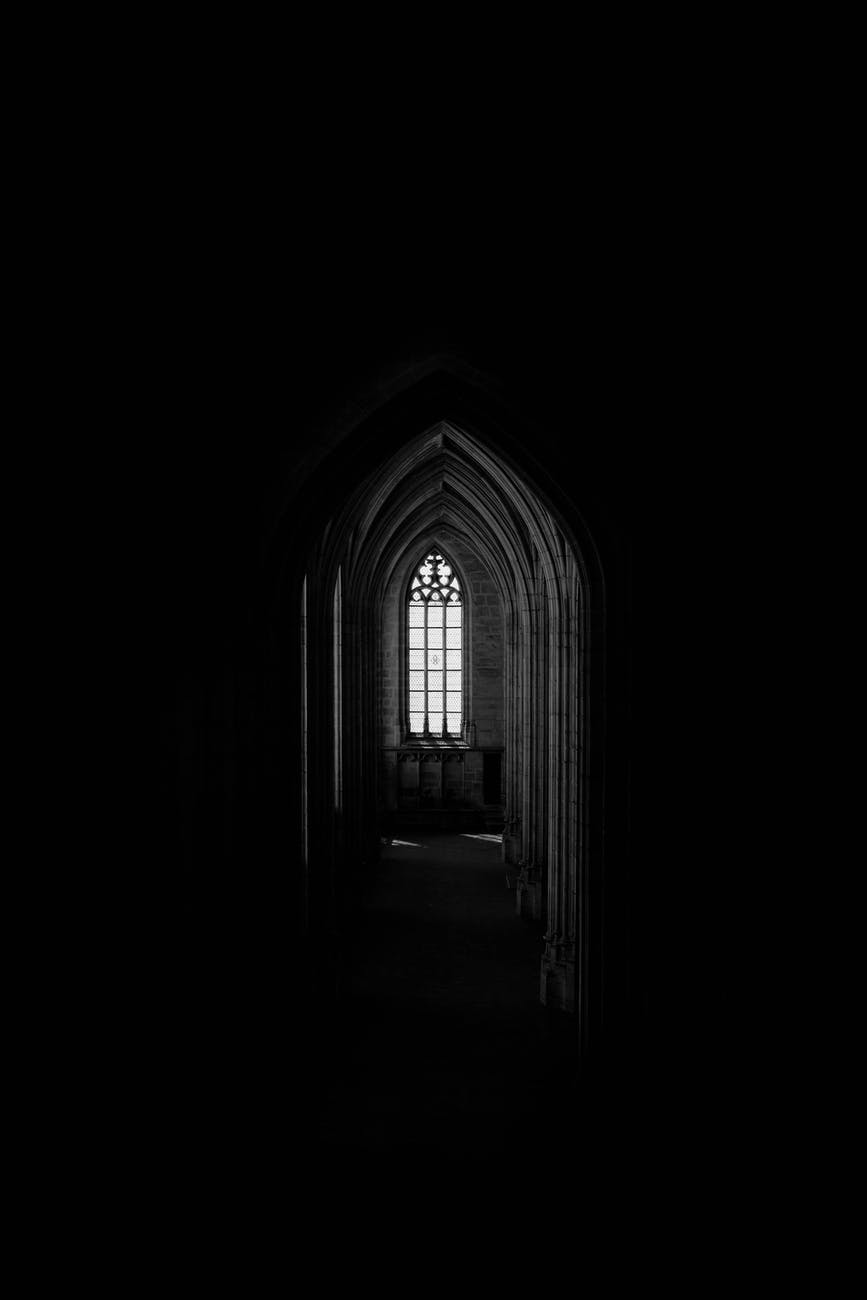
Tromp L’oeil, Year 2
The crash of the phone onto the wood floor woke me. I had that moment of wondering what the sound was, where the hell was I, what time is it, before my brain caught up. Even still, I sat up in the middle of the bed waiting for some kind of prompt.
The phone vibrated against the floor. It seemed to shake the bed. I snaked my arm between the bedside table, groping around, thinking spiders.
I found it. Jack. It was also 3:15 in the morning. I thumbed it on.
“What’s up?”
“The alarm went off at the gallery. Security called. Can you go over there?”
“Sure?”
“The Farm’s security guys have already checked out the space, and there’s no one there anymore.”
The anymore had a weight to it. Moreso than if it were said by someone who didn’t work at a place with our particular inventory.
He continued. “They said front door was shattered, and they boarded it up already, but they can’t tell if anything was stolen. Just go in and look around. Check the video recorder, too. Might need to delete something.”
“Okay. I’ll call you after.”
I sat there a moment, contemplating just going back to sleep. The bed was warm and the windows weren’t broken. I sighed, stood up, and started looking around in the dark for pants.
***
Twenty minutes later I pulled into the Farm’s parking lot.
A police officer stood talking to the shopping center security guy by a police cruiser, lights spinning blue and red shadows across the parking lot. The guy leaned against his truck, arms flailing in storytelling mode. I pulled in next to them, nodded through the window and got out. It was warmer than it should’ve been in late October, but leaves still rustled in a light breeze. At least it smelled like Fall.
“Went ahead and boarded up the door for you,” the security guy said, “but I didn’t go inside. I let Officer Jansen in.”
“Thank you,” I said, then turned to the officer and tried to look grateful. I think I smiled, no teeth, and offered my hand. He shook it. Solid grip that matched his posture. I figured him former military. “You the owner?”
“No. He called me.”
“Right …” he started, then paused, choosing his words. I thought he suppressed a shudder. “I did not see anything.”
I nodded and looked past him toward the gallery. The interior lights had turned off. The orange LEDs lining the front windows made the broken pieces of glass glow like cooling embers on the gallery floor and sidewalk.
“What did they break the glass with?”
“I didn’t find anything inside. Might’ve just been smashed from the outside with a bat or a rock or something. Kids, maybe.”
“Did anything look torn up?”
“Not that I could see.”
I fought the urge to poke at him, failed. “Anything unusual?”
He realized about then I was questioning him instead of the other way around. His mouth tightened in a grimace, lips vanishing. “No.”
I nodded. “Do you need anything from me?”
Ah, yes. Paperwork. I filled in the blanks, answer the questions, thanked them both for their time, then assured them I could handle the rest myself.
***
I pulled the car around behind the gallery and went in through the back door. I flipped off the storage room light and stood in the doorway, letting my eyes adjust to the dark. The light switches for the main gallery were up front by the counter.
I stepped into the gallery and paused. I smelled cigar smoke, and heard faint notes of blues to my left, seeping out of Jeff Ham’s multi-colored Mingus portrait. I ignored it and took five more steps further into the dark. Orange and white light from the front windows spilled back across the gallery floor and walls. I heard a distinct plink of a piano key to my right and looked up at Pamela Wilson’s The Lyric of Chimerical Solace. The piano player shifted her hips, hooped skirt rustling, and looked back at me, then played another note. I turned and headed the other way, walking the perimeter of the gallery.
I passed Scott French’s Nighttime Stories, the one with the nude girl with a schooner on her head riding a polar bear through someone’s bedroom. Did the polar bear have red on its muzzle? The girl on its back appeared to be sleeping, the small ship tucked under her arm instead of atop her head.
I rounded the corner to head to the front of the gallery and could hear the dust and wind blowing out of David Shingler’s palette knifed Chico Basin landscape, could smell the salty air from the trio of Brett Lethbridge paintings, their satin fabrics popping and snapping in the gusts. I ignored it all as much as I could. Another note from the piano echoed across the gallery, and I looked back at the player. She’d stood and turned, leaning back on the keys. She teased her hand across several of them and played another, eyes meeting mine. I looked away.
I kept moving, stopping in front of the door and looking at the spilled glass as the motion detector finally found me and light filled the room. The green haired child clown in Wilson’s Like Ghosts of Fish giggled and splashed water at me, and when I turned to look, returned a smirk and winked. It looked at me through its binoculars.
I took a deep breath. “You can come out now. The police are gone.”
I heard cardboard boxes tumble in the back of the storeroom where I had just been, and a few moments later, a tall, thin man in dirty black jeans and a stained white t-shirt, greasy hair parted to one side stumbled out. He looked like a junkie of some sort, and I knew him, though he’d been cleaner when last we met.
“Walter. What are you doing?”
He walked toward the Piano Player, never making eye contact with me. She was where I’d last seen her, leaning against the piano, the hoops of the skirt bulging out, arms crossed under her breasts, but she was looking at me, not Walter. She arched an eyebrow. I shrugged.
“I needed to see her again.”
“I thought you had decided against that.”
“I …”
I waited.
“I changed my mind.”
I sighed, and I overdid it, so he would hear.
“Walter, you don’t get to change your mind. It’s a one-time affair.”
He turned, raced across the gallery and slammed into me, pressing my back to the wall. I checked to make sure I hadn’t smashed into any of the paintings, then wedged my arm over and under his, pressing his chest back with my forearm.
“I changed my mind,” he hissed, enunciating each word, face inches from mine. Up until that moment, I’d planned on talking him out of it, planned on helping the guy out. I never liked giving them over to the paintings. It made me … uncomfortable. But I’d never had a client pin me to the wall, either.
“Get your hands off me right now, Walter.” I stared him down, noting his bloodshot eyes and how his chest was heaving. All that was missing was froth coming out of his mouth. I braced my heels against the wall, and shifted my weight slightly in case he didn’t let go.
He released my shirt, but didn’t move. “I’m seeing her,” he said, then turned and walked toward the piano player. She looked over his shoulder at me, stuck out her tongue, and then offered Walter her hand. It was uncanny. She didn’t become more real, but maintained the tone and texture of the painting, and yet there was weight and substance to her limbs. The light on her did not look right.
Walter took her hand, placed one foot on the bottom frame of the painting, and stepped up. He became oil and tone and texture. His feet pressed down on the carpet, his legs displaced the hoops of her dress. She led him out of the room, out of my sight.
Nice knowing you, Walter.
***
The next half hour I kept my head down and cleaned up the mess. When I was all out of excuses not to, I walked back to the Piano player. I had to ask.
“Is he coming back?”
She smiled again. “The paperwork has been filled out. It is in the box under the counter.”
“And the fee?”
“Taken care of.”
Right. “Okay, thanks?”
“Would you like to visit one of the girls?”
“I would not.”
I turned and walked away, heading up the creaky wooden ramp to the front counter. Another of Wilson’s pieces, Pink Entropy, sat on the bar. The woman sat the antique black phone back in its cradle on her lap as I approached. She looked as tired as I felt. I wondered who she’d called, then laughed. The dog huffed a muffled bark at me, then licked its chops.
I opened the Box, and took out the fresh set of parchment on top. The bloody signature still glistened in the yellow gallery light. The red letters, which looked as though they’d been written by a frightened third-grader, read Walter Havershim.
I dug out the lighter we use for incense and heated up the black wax stick. I let it drip a puddle on the document next to Dwayne’s signature, then used our wrought iron LG stamp in the wax. I blew to cool it, started to put it back in the box.
The ramp creaked and a man strode up it. The hair stood up on the back of my neck. He was not tall, nor was he short. He was textured. His body was hung with an old school brown suit, complete with silver pocket watch hanging from pocket on a red satin vest. His shoes gleamed in the dull light, as did the thick silver rings on his fingers. A black bowler had sat crooked on his head, and tufts of dirty blond hair stuck out around his ears and neck. His skin was pale, teeth bright as he smiled at me. His eyes were an almost iridescent blue.
“I’ll take that,” he said, and held out his hand.
I looked down at the document in my hand, then at the box, and felt my face heat up. I may have gulped, but I did not shiver.
I held out the paperwork. He snatched with thumb and forefinger on his left hand, made a production of reading the pages, then folded and creased the parchment with a practiced motion. They vanished inside his jacket.
He offered me his right hand. “I don’t believe we’ve met.”
I shook it. “I don’t believe I want to.”
He didn’t let go. The skin was smooth as an infants, but cold, the shake firm, like he could crush my bones. He said, “Nonsense. You’re my employee of the month.”
I felt sick. “What?”
“Employee of the month.” He smiled, all teeth, and I noticed the canines were pointed. “You know, that cheesy award they give out for the month’s best performer? That’s you, boy. Employee of the Month.”
My brain started doing math. “But we’ve only had … six, maybe seven this month? Aren’t there warlords in Africa doing better than that?”
“It’s not always about quantity, is it? Wouldn’t you rather sell one $30,000 painting than a bunch of $1,000 ones?”
I shut my mouth.
He reached inside his jacket with his left hand and pulled out a small silver pin, some sort of sun with a broadsword pointing down through the middle of it. He turned my right hand, which he had not yet relinquished, palm up and placed the pin in the middle of it. It was almost uncomfortably cold against my skin. He closed my fingers around it, finally letting go.
“I’m not really … comfortable with this work.”
He arched an eyebrow at me, tilted his head. “Do you really believe that? Do you not think that each one of our guests gets exactly what is coming to them? Did our boy Walter not deserve his second visit?”
“I don’t know. I’m not a judge. I don’t know about his life, what brought him here.”
“Ah yes, but I do.”
I stood there, eyes locked with his, afraid or unable to look away. I had nothing to say. I had the feeling I didn’t want to anger this man.
“Good! I’m glad we’ve come to an understanding.” He fished the pocket watch out of his vest and checked the time. “I have to be off. Keep up the good work, and remember, I’ve got my eye on you. Let me know if you’d ever like to advance your career.”
He turned and walked down the ramp, whistling to himself. I never heard any of the gallery’s doors opened, but I knew I was alone in the building. I shivered, then locked up and went home.


 skepticlysm