• The bead of sweat trailed down his forehead, but he could not wipe it away. The sensation reminded him of when he was little and his older sister would sit on his chest, knees pinning down his arms, and drag a feather across his face. He’d never really forgiven her for that.

    “You got it?” the radio squawked.

    “Not yet.”

    “Okay, grasp the cylinder by the end with the cap, then …”

    “I heard that part already.”

    “Which?”

    “The part you just repeated.”

    “But you’re not doing it.”

    “There’s a bead of sweat on the end of my goddamn nose. If you want to come out here and do this, I would be happy to sit in the truck and read the fucking manual.”

    “… Grasp the cylin…”

    “Grasp this you motherfucker.”

    “…”

    “…”

    “Did you do it?”

    “Did I do what?”

    “Grasp the cylinder.”

    “That’s it,” he said as another bead of sweat trickled down his nose. He reached up to wipe it clear, hand smacking on the plastic visor. “Goddammit,” he yelled into the radio.

    He gripped the cylinder tighter, grasped the cap and twisted. He did not feel the explosion.

  • She knelt on the broken black boards of what had been her home, gray ash falling around her like snow of the damned. Bits of wood still glowed, the smell of burnt plastic scalded her nose.

    She noticed none of this. She stared down at her hands, which were black and cracked and glowed from embers beneath the skin, but did not feel burnt. She felt no pain. She clenched them into fists, then opened them again, palms up. She blinked her fingers again, and flame sprouted from the cracks, hissing, popping, snapping. It pulled.

    This time, she told the flames no, because this time she noticed she could. Tears formed in her eyes, but turned to steam as they slid down her face. She did not look at the man-shaped lump of char before her, only at the flames dancing on her hands.

    She brought it inside, pushed it down, and curled her body around it. She shook. Ash continued to fall, and she let the sounds of the fire lull her until calm returned.

    In the distance, she heard the whine of a fire truck. She felt surprised it had taken this long, but how long had she laid there? One of the neighbors must’ve called it in. She knew without thinking it was time to go. There would be no explaining this.

    Wings unfurled from her back, the sensation as natural as if they had not appeared for the first time that moment, and she could feel the stretch of tissue and fire and ash.

    She flexed her knees and leaped into the wind.

  • From the journal night before last. I called it, “A Father’s Lament” It’s fictionish.

    Brain skipping like an album at the end of the groove. Blood thumping in my ears. Stomach is uneasy. But the water, cold and clear, tastes sweet.

    He wonders if it will taste the same when there’s no treatment. When you have to bare your fists and break bones and flesh to taste it.

    Will it be warm? Fetid? Will it taste like dirt?

    He thinks these things as the scroll assaults him. He should go run. Move. Plan.

    His daughter sleeps on the sofa. It’s already fallen that far, and the dread of it scours.

    For her, but for what? It won’t get better. He can’t hope. Hope lessens his guard, softens his vigilance. Blink but once and they starve. He won’t, but only because of her.

    Even now, as he pauses a thought to take a breath, at the apex he can hear her tiny snores, free from strain and stress and worry.

    When is the day she sees the world as it is? When does her light dim, the flame falter in the blown breath of disillusionment.

    Not tonight. And it wasn’t today. He vows, again, to keep it from her tomorrow, despite the knowledge it has nothing to do with what he wants. It will just happen as things happen.

    And that would be easier. Duty and mountains and feathers.

    He finishes the breath, takes another. After all, things must sleep. Perhaps, especially, love and duty.

  • I started Makers (by Cory Doctorow) today. I was all of 16 pages into it when I had to put it down. No, not because it’s bad. So far, it’s pretty damn good. But because after the fifth page of cool ideas, I found myself thinking about the author as much as the story.

    From what I remember reading about Doctorow, he pretty much knew from birth he was going to be a writer. His parents were intellectuals and no doubt removed any obstacles preventing him from pursuing his path. They encouraged him, guided him. Taught him to think.

    I’m speculating. I only know what I’ve read from him, and what I admire most are the ideas that come out of the guy. He’s thrown away more good ideas than I’ve ever had.

    I assume this is because first, he believes in himself and what he’s doing, and second, he is a very good thinker, which is a rarity these days.

    Thinking is hard. Look at this election cycle. How many times have you been at work in the last six months and heard someone repeating nonsense from Fox News or CNN or whatever horseshit “media outlet” they watched/read the night before. I’m guilty of it. It’s much easier to read/watch and borrow than it is to think about what you’re taking in, perhaps do a little bit more in-depth reading on the subject and come up with your own personal take on the topic.

    Even the smartest people you know are guilty of it.

    I think it’s deplorable.

    It’s only excusable in one sense: our education system isn’t teaching us to think anymore. Test scores are the thing. Read, memorize and regurgitate. Where’s the thinking part?

    You don’t get it in undergrad, either. Undergrad is a continuation of the same methodology you get in high school. Read the book, take the final, get a grade. In grad school, you finally start getting into thoughtful education. They want you to think then, or at least, that was the case for me.

    But what happened when I got out and started work? Do the job. Don’t think about the job, or anything remotely existential, just do the job. Thinking isn’t required, for the most part. Perhaps a bit of problem solving now and again. I’m speaking about myself here, but I wonder how many of you can relate. I’ll bet most of us don’t operate in environments ripe for the cultivation of new ideas.

    And ideas are the thing. Ideas (followed by action) are what change the world.

    I’m venting here. Frustration at myself. I’ve been trying to work on the plot for a new book for the past couple of weeks, and it’s like walking through mental quicksand. And  I keep asking myself, “why is this so fucking hard?”

    Because I haven’t been thinking. I spend my days checking off boxes on to-do lists and then surfing the web. I can’t be the only one.

    Food for thought, anyway.


    edit: not bagging on teachers. I think they are largely hamstrung by the system. Also, I’m giving serious thought to becoming one of them.

  • Beyond

    Used to be a film critic for Urban Tulsa Weekly. For 11 years, I wrote a column wherein I also talked about movies. It was half rant, half review, usually. It was something I was fairly passionate about. Didn’t pay worth a damn, but …

    I added it up once. It came to around a million words about movies.

    I bailed on it in 2009. My daughter was one and our weekends needed to be about getting things done and hanging with her, not trying to cram in 8-10 hours of work for what amounted to $6.25/hour.

    I miss it. Sorta. I don’t get to see as many movies. I never, it seems, get to see the Oscar contenders anymore. And when we do go, it’s usually the latest blockbuster … which is what brings me here today.

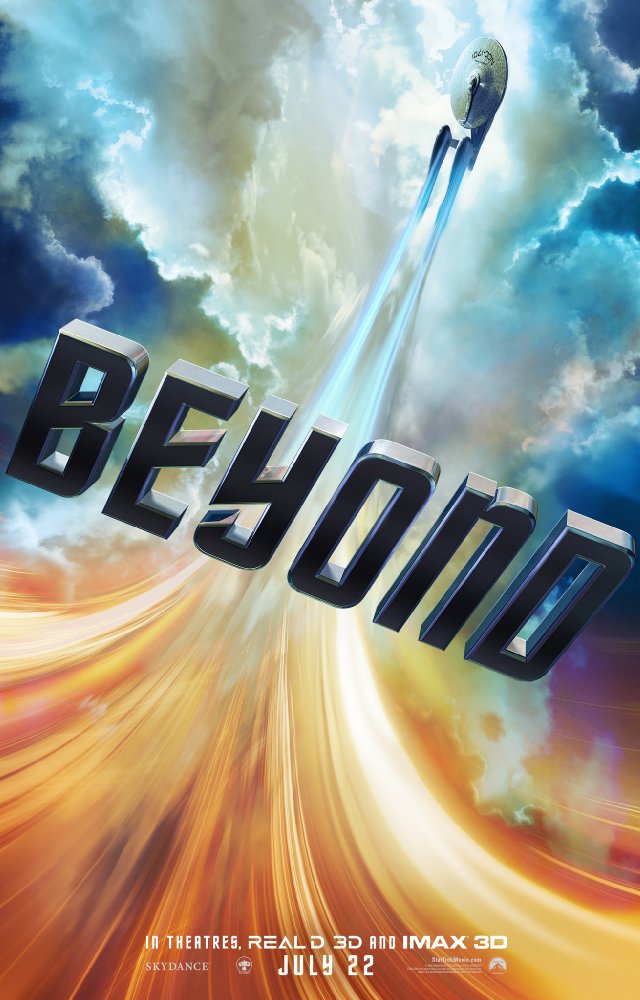
    Last weekend, the wife and I (and a couple friends) watched Star Trek Beyond. The one word review is easy: meh.

    It’s not that I didn’t like it. I did. I just couldn’t make myself love it. I loved Abrams’ Star Trek. I’m not a trekker. I’m a Star Wars guy.

    I won’t bore you with a synopsis. You can read about the plot everywhere else on the internet. The crew of the Enterprise is on its five-year mission to explore new worlds, yada, yada, yada. James T. Kirk (retcon version) is bored. Spock wants to leave. Bad guys show up. Bad things happen. The entire cast gets a story line.

    And that’s the problem. In this flick, Kirk’s character arch is of the same weight and screen time as Scotty’s. And Sulu’s. And Spock’s. And Uhura’s. And Bones’s. Admirable, but when you try to do that much in a two-hour movie … they all get shorted. They all come off less than had the story focused on Kirk, for instance. You get less opportunity to get emotionally involved with a narrative.

    Because of that, this is your walk-to-the-car-after-the-movie conversation:

    “Welp, that was a Star Trek movie.”

    “Yup. I reckon it was.”

    “That part with the ship was kinda cool. You remember?”

    “Nope.”

    I actually do remember, I just don’t really give a shit. Sure, it looked great. The cast was charismatic. Love the cast. But … meh.

    It’s exactly the same problem I had with Captain America: Civil War. I read all the hype, all the accolades. “Best Marvel Movie Ever.” The hell it was. It could’ve been, but it wasn’t. And you know why? Too damn many characters in it. That whole movie existed just for the airport scene. Would’ve been a much better flick if they’d kept the focus on Cap, Tony & Bucky. Cheaper to make, too.

    Don’t get me wrong. I thought Spidey was awesome and I can’t wait to see what Marvel does with his new movie. But Civil War? Was okay. Was definitely not a “OMG I HAVE TO BUY THE BLU-RAY” movie. Both the previous Cap flicks are better.

    Sure, it was pretty. It had all the bombast we’ve come to expect from the Marvel flicks. But it crammed too much in there. The first Avengers flick and Guardians were better, more enjoyable films, and I really liked The Winter Soldier. All three of those films walk the line better than Civil War. 

    The point I’m poorly trying to make is this: both of the films are bloated with characters, and because of it, they lack emotional content.

    I’ve seen the spectacle. Anyone can make films with all manner of digital mayhem. Beautiful vistas are no longer out of the reach of even modestly budgeted films. We’re no longer wowed by just the dinosaurs in Jurassic Park. What separates good from great, meh from wow, are good stories and good characters.

    It’s always been the case, but we sometimes forget. Star Trek Beyond sure did. And for some reason, I feel like I’m apologizing for expecting more. What the hell. I blame Simon Pegg for this. I trusted you. You were the chosen one.

    All this for a movie I liked.

    Seeing Jason Bourne Friday. Here’s hoping.


  • Sitting here sitting in front of the proverbial blank white page. What to write. What to say. What to think and how to think it. How to change thoughts to action. How to step over, through, around the artificial barriers and fucking MOVE. Forward. Sideways. Maybe backward. Inaction is the enemy.

    Internally, building pressure. Rivets straining, beads of condensation rolling down the skin. A moment of explosion comes. Will it be destruction or creation?

    Why wait on it? Why not hit the button and blow the shit up?

    I never wanted this blog to be about my brain problems. My failings to launch. It always comes back to that, some galactic apology to the world for not living up. To you, whom I don’t even know. To my friends, family. To my wife and daughter.

    The fear of failure breathes failure into being.

    It all sounds so melodramatic this way, typing it out, putting it out there. And yet, it’s smaller than the accompanying emotions. Inside, they aren’t cries of quiet desperation. They’re throat-tearing roars. But the surface is calm. Mostly.

    I guess you do have to hit rock bottom to change. You have to be desperate. You have to unlearn behaviors, thought patterns. The brain is the enemy. It wants you to stay, even if you’re miserable because it understands where it is and what’s going on. It understands the threats.

    It lies. Always.

    “Barriers.” The word was said to me yesterday. I think it was said because I wasn’t thinking along the same path as the sayer, but it made me think about the word, and then the word became a question, which became a thought process.

    Every time I hear something that’s not in line with my preconception, I say, “No.” I always come back around to it, but my instinct is the negative, and that’s from fear. My gut reaction is one of fear and safety.

    Our brains are hardwired for fight-or-flight. They are meant to keep us safe from all threats. Most of our environmental stressors in modern day ‘Merica aren’t life-or-death, however. But our brains don’t know that. Most can mitigate that. Those of us with anxiety disorders have a bit more trouble. Fighting the irrationality isn’t as simple as saying, “shut up, brain.”

    Which is to say, I don’t mean to put up barriers to my “success.” It’s like a mental Spartan Race, with obstacles to fight through as standard operating procedure. Some of those take more training to overcome than others.

    This is a bunch of metaphorical bullshit. The short version: change is fucking hard, even if you really want it. I think you may have to resort to mental chicanery.

  • I’ve made my living writing, basically. Not the kind of writing I want to do or enjoy doing (mostly), but writing nonetheless. I believe in the power of something well written. I believe that if you do it well enough, people will pay attention. Maybe not the whole world, but at least the people you’re trying to talk to (or with). The right words in the minds of the right people can change the world.

    I’ve had arguments with people in my profession about this. They say no one reads. No one follows you. It needs to be shorter. It needs to have video. It needs hashtags and blah, blah, fucking blah.

    I studied this shit extensively in grad school, and I could give you lectures on things like Two Step Flow, Diffusion of Innovation, Agenda Setting Theory, and my favorite, Uses and Gratifications. (Wellllll, I could if I went back and re-read my papers on these theories; it’s been awhile, but the fundamentals are still there.)

    Most university media programs focus on teaching you how. This is how you write a feature. This is how you write a press release. This is how you write an ad. Though I suppose these days it’s, “this is how you write a blog with the highest amount of SEO terms possible so as to get the highest amount of page views.”

    And that’s the kicker. Eyes-on equates to good enough. But it isn’t. I’ve quit watching the news because a house fire isn’t a news story (sorry, Matt, it’s not). “If it bleeds it leads,” is not a long-term viable strategy, it’s a way to make sure the “ratings” are up so the media source can justify its rates to potential advertisers. As it stands, the “news” doesn’t tell me what I want to know.

    But back to my point. I believe in quality. I believe in the power of good writing, of good ideas and good execution. And maybe I’m wrong, but …  I think if you make good things, people will come. They’ll read or view, and if you’ve done it right, there’ll be discourse.

    I usually feel like I’m on an island with this, but I read a really awesome column on Medium today, and this part really resonated with me:

    Your problem is that you make shit. A lot of shit. Cheap shit. And no one cares about you or your cheap shit. And an increasingly aware, connected, and mutable audience is onto your cheap shit. They don’t want your cheap shit. They want the good shit. And they will go to find it somewhere. Hell, they’ll even pay for it.

    The truth is that the best and most important things the media (let’s say specifically the news media) has ever made were not made to reach the most people — they were made to reach the right people. Because human beings exist, and we are not content consumption machines. What will save the media industry — or at least the part worth saving — is when we start making Real Things for people again, instead of programming for algorithms or New Things.

    So what will matter in the next age of media?

    Compelling voices and stories, real and raw talent, new ideas that actually serve or delight an audience, brands that have meaning and ballast; these are things that matter in the next age of media. Thinking of your platform as an actual platform, not a delivery method. Knowing you’re more than just your words. Thinking of your business as a product and storytelling business, not a headline and body-copy business. Thinking of your audience as finite and building a sustainable business model around that audience — that’s going to matter.

    Joshua Topolsky

    The ideas he’s talking about (especially that bit I bolded), those are the operating philosophies I incorporate into my day job, into the things I do for the bike shop and other small businesses I work with (or have worked with). That was the philosophy I used for my movie column for 11 years.It isn’t about the numbers. It’s about the connection. It’s emotional. If you do it well, the people you want to read it probably will, and then they’ll do the unthinkable: They’ll remember they read it and MAYBE talk to someone about it.

    It isn’t about the numbers. It’s about the connection. It’s about meaning and value. It’s emotional. If you do it well, the people you want to read it probably will, and then they’ll do the unthinkable: They’ll remember they read it and MAYBE talk to someone about it.

    I mean, how much shit did you read on Facebook today that you actually remember?

    Take your time.

    /end mind dump

  • All That Mental Bullshit

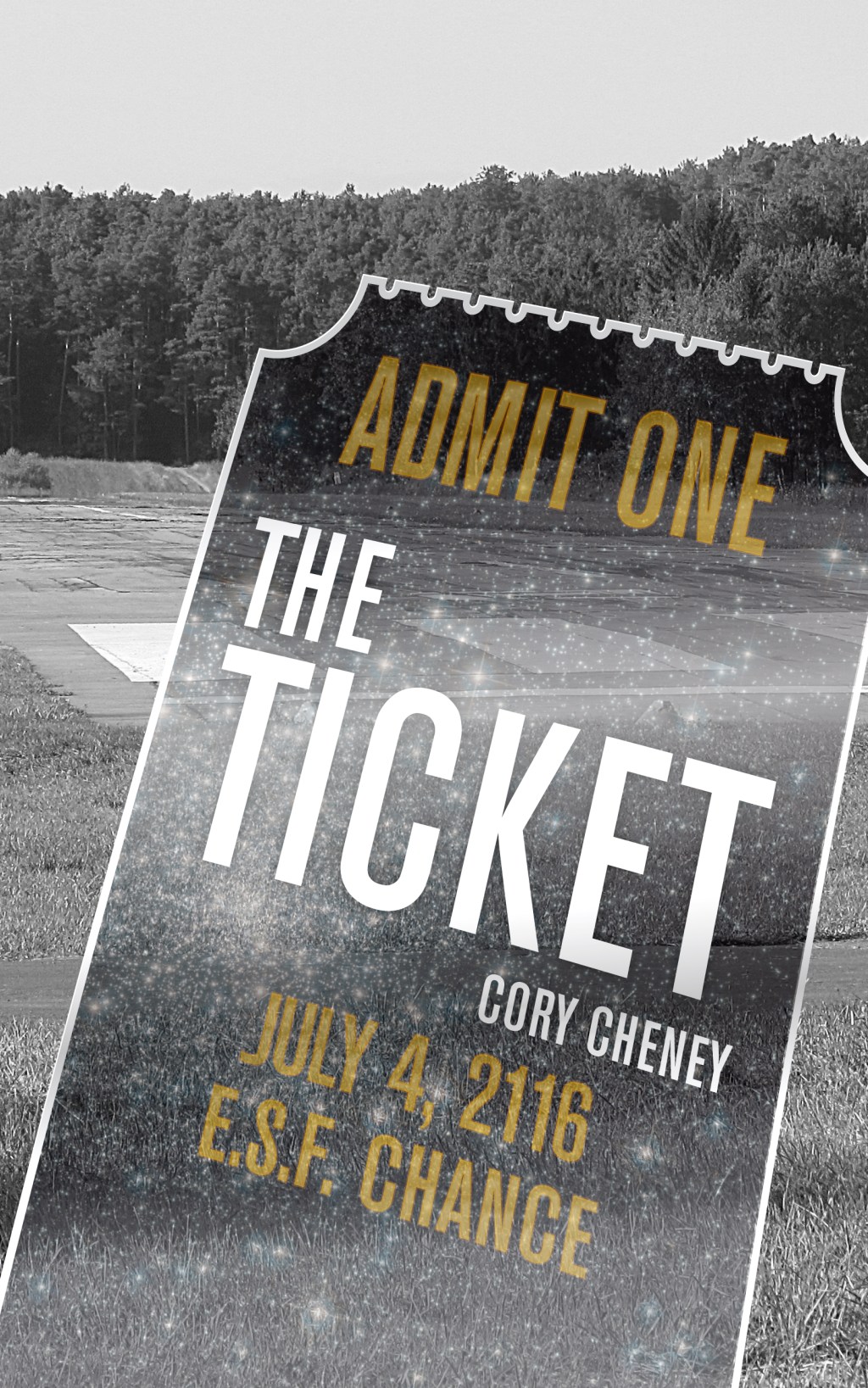
    Last week, I published a short story on Amazon.

    It’s called “The Ticket,” and it’s a end-of-the-world-what-would-you-do-if kind of story.

    I’ve had it bouncing around in my head for years, though I initially envisioned it as a screenplay. The opening scene was a bunch of military guys busting into a base and attempting to steal a RLV (reusable launch vehicle) to get off the Earth. Lots of gunplay and action. I still think if it ever gets picked up, that scene has to be there (along with a whole character arc for Anya).

    It’s maybe the only story idea I’ve ever had where the ending came to me before the beginning. I’d never tried to write something knowing where I was going before, and the results were … weird? I’m happy with how it turned out, but it did not turn out how I envisioned. These things have a mind of their own.

    But the point of the exercise was to put something out there. Full disclosure, I have a couple degrees in mass communications and have been making a living off my writing since 1996. That kind of writing means little to me, however. Since I was in sixth grade, I wanted to be a novelist. One might think that with that goal in mind, all my decisions would’ve been made to line up.

    Nope. Not even a little. I don’t think I thought it was realistic, financially, so I didn’t really pursue it. Grabbed my minor in creative writing, sure. Wrote a serial fiction series for the college newspaper. Submitted a short story to one adult fiction contest (placed “honorable mention”). And that’s been it.

    Somewhere along the way I became afraid to try. I’m horrified to fail at it. It’s become such a core part of my identity, that I’m not sure who I’d be if I found out I wasn’t really good enough. Better to not try at all. You know, all that mental bullshit.

    Thing is … I know deep down it’s what I’m supposed to be doing. The fiction writing thing. I’ve only ever felt content when that was what I was doing with the majority of my time; that’s happened twice. Am I good enough to make a living? Who knows.

    What I know now is that I have to try. I have to focus my efforts to that goal, and it’s something I’m unaccustomed to doing. I don’t know how. I lack the self-discipline. annnd there’s more mental bullshit. I will overcome.

    It was horrifying to stick a mostly unedited short story out on Amazon. I’m still scared to put a link to it on Reddit (where a little self-marketing could be an uptick in sales). Anxiety is a bitch.

    Right now, I’m writing this blog to write something, a mechanism to get the fingers typing and the routine built into the day. I’ve spent one month and change writing and publishing and dealing with that first story. It’s time to start the next one. I just have to figure out what that is. Oh, and I’m going to go ahead and compile my giant stack of random short stories I’ve written over the last 20 years into a “book,” and upload that thing, too. What the hell, right?

    Just don’t ask me to read my reviews


  • I know I have some work yet to do on it before I’ll call it “finished,” but here’s a tease anyway.


    THE TICKET

    Burns Flat, Oklahoma
    July 2, 2116, 7:45pm, CST – 43hrs, 51 mins until Chance Departure

    He didn’t want to die.

    That’s what he thought as he sat on his bike, fingers hooked through a rusty chain-link fence, staring past a red dirt moat full of laser mines and another row of razor-wire topped fence. The only hope in Hem’s world were the two RLVs sitting on the spaceport tarmac maybe a couple hundred meters away.

    Crawlers scoured the crafts’ surfaces, fixing imperfections. No one could afford for either of the two to become inoperable; time was short. In two days, the world killer was coming.

    “Too inconsiderate to wait for the fireworks,” Hem said to no one.

    Of the two craft, one was military/NASA, the Fortune, its coat dull grays and matte blacks, lines sleek and aggressive. The second RLV, Chance, sat apart from the other, its bright blue hull a beacon on the otherwise uniform gray spaceport. There had been a third two days ago, until a SpecOps team decided they needed off the rock more than everyone else. Charred bits of the Imperator lie scattered across the grounds.

    These were third or fourth generation RLVs, much larger than early models rolled out by SpaceX and Lockheed Martin. At one time, Hem could’ve quoted you the weight tolerances and the amount of fuel needed to achieve orbit with a full roster of astronauts. People quit paying attention to the specs a long time ago. All anyone cared about was whether or not they had a reserved seat.

    It’s not that they couldn’t make more trips. It’s that the habitats, the Arks, were allegedly at capacity. You didn’t get a ride if you didn’t have anything to offer the human race.

    The thought made him queasy.

    The messenger bag dug into his shoulder, the spot chafed and angry from the afternoon’s riding. Sweat cascaded down his back and into the band of his pants. He took a sip of stale water from his green Coleman flask, lowered it and swished the last shot around the bottom.

    His watched buzzed against his wrist. He rubbed the bezel with his thumb and Anya’s text floated in the air, three feet past the fence.

    YOU ALMOST HOME?

    “Yes,” he said, then waited for the reply.

    YOU DIDN’T FORGET DID YOU? WE’RE SUPPOSED TO BE THERE IN 45 MINUTES.

    “No.”

    GOOD. HURRY.

    “I will.”

    LOVE YOU.

    The words hung between the RLVs and himself, pulsed three times, then faded. He blinked the display off, gave the Chance a last longing, then kicked off and pedaled away from the fence.

    ***

  • Hey, I’ve written 2,000 words in the last two days. Yay, me.

    And no, you may not. Not yet.