• The Law of Unintended Movie Mondays
    • What is happening.
    • That’s more rhetorical as I’m not really asking.
    • I don’t expect you to answer, but a greeting of some sort on a Monday morning seems … proper.
    • I’d ask you if you were sitting in my office. Or if we were sharing a phone call.
    • Or a Teams chat.
    • Holy cow, Teams.
    • I still love Teams. Best collaboration tool I’ve ever used professionally.
    • Don’t call me on my phone. Call me on Teams, is what I’m saying.
    • And by call, I mean send me a chat message.
    • Talking is the worst.
    • Watched Reminiscence Saturday night.
    • Meh.
    • Trying too hard to be sci-fi Chinatown.
    • Makes me wonder if Noir is dead.
    • Setting was awesome. Characters were fine.
    • Movie was meh.
    • Someone gave me a hard time last week.
    • They said something like, “You went from movie critic to ‘it was okay.’”
    • After doing the movie critic thing for 11 years, I quit cold turkey.
    • I debating coming back to it.
    • Even started a blog.
    • Reviewed like, two, maybe three movies on the blog.
    • Quit again.
    • Film criticism seems outdated and unnecessary.
    • I wrote my Master’s thesis on film critics, mind you.
    • But it’s hard to compete with a Rotten Tomatoes rating.
    • Film criticism has been democratized.
    • I think if there are any viable film critics left out there, it’s only because people like them for their voice.
    • And it trips hard into gatekeeping.
    • “If you don’t like such-and-such movie, you clearly don’t know anything about movies.”
    • Bah. Watch whatever you want. Like whatever you want.
    • If you need an opinion before you commit, find someone you know who has similar tastes.
    • I have managed to get the Teenager turned onto movies other than Marvel recently.
    • I employed Mr. Hanks, showed her The Terminal and Catch Me If You Can back-to-back.
    • Last night, she said, “Hey, let’s watch a movie.”
    • The wife and I were stunned because she either doesn’t want to watch movies, or only Marvel movies.
    • “Okay, what do you want to watch,” I said.
    • “I don’t know. You pick. You’ve done a good job picking movies lately,” she said.
    • …
    • …
    • So I threw on The Adjustment Bureau (which is not Tom Hanks, obviously, but we’d talked about watching Stillwater all weekend, so a Matt Damon flick the kid might watch seemed in order.)
    • Movie Monday, I guess.
    • Before we get past that, however … Tom Hanks has made a truckload of good movies.
    • He is a national treasure.
    • You guys follow his socials, right?
    • Totally would have dinner with Tom Hanks.
    • I really, really did not mean to only write about movies today.
    • Gonna be a hot week.
    • Do your exercise indoors?

    Disclaimer: I write these for work. Figured I’d get some extra mileage out of them. But some of it won’t make sense here. What you gonna do? Edit? Pssh.

  • Holiday Lights

    (unedited)

    The little gray plastic tab locking the screen in place didn’t want to cooperate. Connor stopped, glanced back over his shoulder. The loud voices seeped through the walls, beneath the small crack between the bottom of his door and the carpet, into his chest.  

    The cold wind rushing in from outside chilled his skin, a welcome respite from the heat of the house. A hint of fireplace smoke tickled his nose, the air otherwise crisp and clean.  

    The tab pulled loose. He started on the last one, bottom of the window’s left side.  

    The yelling from the front of the house stopped. Then stomping footsteps. The slam of the front door.  

    Then a louder voice, gruff, harsh, gravelly: “Merry Christmas.” 

    She’d gone, then.  

    He slid the window closed, moving slow and quiet, and sat back on his bed. He reached for The Swords of Lankhmar on his bedside table with his left hand as he pivoted, brought his legs up, settled them in place, and opened the book. He could almost read from the ambient light off the snow. But not quite. 

    He reached behind his head and flicked on his reading light, a flashlight with a long, flexible neck he’d duct taped to the back of his headboard. It created a small pool of wan yellow light you couldn’t see under his door from the hallway.  

    He tried to read, but the words fell away like water through fingers, thoughts a whirl of worry and anticipation. He wondered why they were fighting this time, on Christmas Eve of all nights. His favorite night. Usually. 

    He focused on the words.  

    Heavy footsteps down the hall, toward his door. They stopped, and he reached back to the flashlight switch, poised his fingers above it. The steps left, followed by the clicking of light switches and the flush of a toilet. A smoker’s cough, then the creaking of a bed.  

    He realized he was holding his breath. He waited 10 minutes. Then 20. He looked to his digital clock, which told him he couldn’t count, that it’d just been five minutes, so he started watching the red numbers climb up, minute-by-minute. 

    Time slowed, but Connor’s mind raced, a mix of where-was-she and what’s-under-the-trees, of guilt and excitement. He laid there, staring at the ceiling, imagining the floor he couldn’t see, where he’d left his rain boots, his coat. He planned his movements in order.  

    The house settled into its small-hours rhythm, creaking slightly in the wind, the heater kicking on and off, big, slow, warm breaths. 

    He waited and tried not to look at the clock’s glowing numbers. Then he gave up and climbed from his bed, going through the rehearsed motions. Jeans first, then socks, boots, coat, but not gloves. Back at the window then, he eased up the bottom half and applied pressure to the bottom middle of the window screen. It popped loose. He caught the bottom edge, pushed it the rest of the way out of its track, and lowered it to the ground. 

    Connor climbed through and down, to the snowy flowerbed beneath his window. He walked toward the middle of the yard with careful steps, the top layer of the icy-snow crunching beneath his boots. After 20 steps, he stopped and pulled in as big a breath as he could, then let it out in a flume, pretending himself an ice dragon. The stars twinkled overhead. The breeze whisked away some of the tightness in his chest.  

    North, across the big, winter-barren soy field, past the trailer park at the river’s edge, across the river and up the side of the rocky, steep hill, slow-moving lights of cars pulled across the distant highway. He imagined climbing the rocks, running through the trees topping the hills. He had a dark cloak, longbow, leather pack, and a sword on his hip. Running off to meet the elves. 

    There weren’t elves. He knew that. But elves in the woods probably didn’t worry about arguing parents. If there were elves in the woods, and they wanted him to go, he totally would.  

    Connor took another gulp of cold air and looked back to the stars. Sometimes, standing alone in his backyard as he often did, he’d see a comet. Once, he watched a big blue one travel across the sky, tail dragging behind it, fast, but slower than he thought a comet should move.  

    He thought about going to look for her. He’d done it before. Often. Sometimes, she’d just be laying across the back seat of the station wagon. Sometimes, the car would be gone. Others, just her. But tonight, for some reason, he didn’t go looking. He needed the night’s stillness, the silent, watching stars and the embrace of the cold. He often felt alone, but never at night, never under the starlit sky. 

    He felt the pull again, as he often did, toward the trees on that distant hill. To things that didn’t exist, that couldn’t, that only held to reality in the pages of his books. He had power there, amongst the ink and paper, where magic was real. 

    He sighed. Twelve years seemed too young to give up on magic, to give up on hope. But he wished it, for magic and wonder, for something other to be real. 

    Something high and to his right pulled his eyes. Straight down it fell, flame-flickering blues, greens, golds and reds, right into the trailer park. He expected an explosion as it crashed, but it vanished. Seconds ticked by, then it reappeared, hopped to the next trailer. One by one, it hopped between the flat roofs, left to right in his vision. At the end of the park, it turned and bounced to a house along the road, the first in the subdivision.  

    “What the …” 

    He wanted to move, but moving felt … wrong? He turned, still carefully, 90 degrees to his right, and watched as the fiery light hopped from one house to another down his street.  

    Then it was at his next-door neighbor’s house, its light so bright it was like looking right at one of those giant, blooming Independence Day fireworks from the town display. Multicolored shadows, it sizzled and popped as it vanished down the chimney.  

    Connor released the breath he’d been holding, again.  

    The lights popped up, then rushed toward his house. They flickered and crackled, popped like an kaleidoscopic campfire. The snow along the flue hissed as the light touched it, slithered between the vents and flowing down into the chimney. 

    It was in his house.  

    Again, his mind raced. Actions suggested and denied. Scenarios playing in trees of choices. 

    When the light began rising from the flue, Connor stopped thinking and said, “Wait.” By then, the light had coalesced back into a whole of sorts, and halfway in between its next bounce, at the edge of Connor’s roof, it stopped. 

    He did not see a figure. No person, no elf. A ball of prismatic fire that made him think of the lights on police cars. The light turned toward him, and then hopped off the roof, landing right where he’d stepped from his bedroom window. It bounced from snowy footprint to snowy footprint. 

    It reached Connor, circled him on the ground, pulling behind it a warmth Connor felt in his mind and to his bones more than along his skin. The light floated to eye level. Inside, he could see a small figure, clad in red armor over darker red fabric, a heavy red cloak hanging from its tiny shoulders, a tiny broadsword from its hip, its eyes points of red and green and gold and blue sparks inside a blazing white ball where its face would be.  

    It felt fierce and wild and powerful. 

    Connor could not speak, but fear did not grip him. And then he heard words inside his head. 

    Do not give up hope. It exists, and you will see it.  

    The figure backed away, jumped to his roof and stopped. He felt the weight of its attention on him again. 

    All will be well. 

    And then it hopped to the next house, and then the next, working its way down the street, through his neighborhood.  

    Connor stood still, but followed, watching until the light zipped back into the sky, trailing off to the west and vanishing. He closed his eyes, stretched out his arms and breathed. Lightness enveloped him and he found himself smiling. He could still hear and feel the words in his mind. 

    He stood in the yard until the feeling dissipated, though his chest felt loose and light, mind calm. Connor walked back to his window, clambered back inside. He reset the screen and closed the window. He pulled off his coat, his boots and his clothes, and slid into bed, pulling his heavy quilt to his chin.  

    Down the hall, across the house, the front door squeaked slightly as it opened and closed. Pressure in his chest lessened. He did reach up and shut off his light this time. She’d check. Smaller steps down the hall this time, again stopping at his door. The knob twisted, wood brushing across the carpet as she pushed it open. Just a crack. Enough to peek. His eyes squinched almost shut, he could see the darker-than-dark gap between the door’s edge and the frame, but couldn’t see her.  

    The door closed. More sounds, her getting into bed. 

    The house creaked and settled into stillness and warmth. In the moonlight from his window, Connor looked around his room, the whole experience replaying on a loop in his mind. After a time, his eyes felt heavy, so he closed them. But he could still see the flickering lights. And when he dreamed it was of hope, and mystery and magic.  

  • Tromp L’oeil

    Year 1

    Jack, the gallery owner, had left early. He’d said something about banks, taxes and traffic, grumbled, then stepped out the back door into the windy October evening. It was about half an hour until closing time, and I told him to watch out for the crazy drivers.  

    It’d been a slow day, so I’d spent most of it behind the keyboard catching up on inventory and getting photos of the new artwork up on our website. You’d think there’d be an easier way to do such things, but so far, the technology gods hadn’t provided it. I kept clicking and watching the clock. At five of six, I got up and started closing down.  

    I had all the computers off and was locking the front door when my phone rang. I dug it out of my pocket, looked at the face. Jack. 

    I answered, “Hey, what’s up?” 

    “I just remembered something. Someone might be coming by right after six to see the … after-hours collection.” 

    He paused, letting what he said sink in. I inhaled, nodded to myself. It had to happen sooner or later, I supposed. 

    “Okay. I got it.” 

    “You sure?” 

    “Yeah.” 

    “If you want me to come back and deal with it, I can.” 

    “No, it’s fine. Who is it?” 

    “Doesn’t matter, but he mentioned wanting to see the Angel.” 

    I winced. “Really? Did you try to talk him out of it?” 

    “Yes.” 

    I nodded again to myself. “All right. I’ll take care of it.” 

    “If you have any trouble, call me. Otherwise, I’ll see you in the morning.” 

    It’s not that I hadn’t shown the afterhours collection, mind you. It’s that I hadn’t done it by myself. I walked back and unlocked the front door, then headed to the fridge in back and got a beer. I popped the cap, then headed out to the wooden ramp leading from the upper gallery to the gallery floor. I leaned on the worn, wooden handrail. 

    About then, the lightshow started. We have a program that controls our lighting, and at six every evening, it sets the lights dancing throughout the gallery, alternately illuminating different walls and works of art, drawing the attention of passersby. We know it works because we have to have the windows cleaned twice a month to get rid of the hand, forehead, and nose prints.  

    Outside, leaves tumbled across the parking lot and the trees swayed, casting dancing shadows on the ground. I imagined I could smell burning pinion wood. The sky was cloudy, and the clouds had that ambient glow from the city lights. I couldn’t remember if it was supposed to storm. 

    I’d almost finished the beer when the doorbell rang and the gentleman stepped into the gallery. He wasn’t very tall, and had unkempt dark hair atop his head. He wore a black pea coat buttoned tight, dark pants and black leather shoes in need of a good shine. He tweaked the end of his nose and sniffed, then looked around the gallery, eyes following the lights. I wondered if he could see them yet. Probably not. It was early still, or late, depending on how you looked at it. 

    He seemed hesitant to step further into the gallery. I wondered how long he’d sat in his car getting up the nerve. 

    “Good evening,” I said. 

    He stiffened, then looked around, trying to find the voice. I walked down the wood ramp, moving slowly and trying to look unthreatening. Don’t want to startle the deer, do we? I stopped a body length away and introduced myself. 

    “What’re you here to see, specifically?” 

    He looked at me and said, “the trompe l’oeils, obviously.” And just like that, I didn’t like him. Tone speaks louder than words.  

    “If you don’t mind my asking, where did you hear about us?” 

    “Places.”  

    “Our darknet site?” 

    “I read that, yes. But I’d heard of this place before.” He paused, swallowed. “It’s all … true?” 

    I nodded. 

    He looked around the gallery and started, his body jerking like he’d had a spasm. 

    “Is there anyone else here? I was told this would be a private showing.”  

    “It’s just you, me, and the art.” I waited a minute for him to calm down, then continued. “You’re comfortable with our terms and the fee?” 

    “Yes,” he said, again with that tone. 

    I nodded at him. “Follow me. We’ll take care of the paperwork, and then you can get on with your … viewing.” I walked away from him, back up the wooden ramp, and behind the counter. Their eyes, and his, followed me as I unlocked the black wooden box. I found what I needed, closed it, and presented it across the counter, five overly large sheets of parchment with scrawling text. 

    “If you’ll just read through those and sign on the last one.” I said. 

    “Is all this really necessary?”  

    “It is.” 

    He sighed, but began reading. It takes longer than you’d think to read through five pages of overly foreboding calligraphic text. Anyway, I wasn’t in a hurry to get on with the next portion of the evening. He finished, looked up at me, and stuck out his hand. 

    “Pen.”  

    I handed him the black wooden fountain pen from the box. He examined it, looked at me. “Where’s the ink?” 

    “If you agree to the terms, sign.” 

    He put the pen to parchment, then hissed as the barrel of the pen bit into his fingers, drawing its ink. He grimaced, signed his name. A few dark red drops fell off the nib as he finished then handed the pen back to me. I scooped up the parchment and deposited it back in the black box, taking my time and trying not to think.  

    “Do you have the cashier’s check?” 

    He unbuttoned the pea coat and dug out an envelope. He slid it across the counter. I left it. 

    “What would you like to see first?” 

    “All of it. I’m paying you enough.” 

    That was true. I gestured to the paintings behind him. “Shall we start up here?” I walked him over to the wall, stopping in from of K. Henderson’s Licorice Allsorts. It seemed an innocuous place to start. He looked at me. 

    “So I just reach in?” 

    I could tell he was unconvinced, and perhaps thinking he was PT Barnum’s proverbial sucker, so I reached into the painting, plucked out an orange candy and popped it into my mouth. To the right of the candy jar painting was Girl with a Curtain, a small oil painting of a nude woman drawn in pencil, framed by white diaphanous curtains. The curtains moved gently in a breeze I could neither see nor hear.  

    He moved closer, reached slowly toward the girl. She shied away. He pulled his hand back and glanced wide-eyed around the gallery.  I could hear the city sounds – bustling traffic, the scuffs of footballs on the sidewalks – emanating from Erica Norelius’ Walking from Chinatown. The sensation made me giddy, like the first time I read a Harry Potter book.  

    He walked away toward the wooden ramp. As we passed Joseph Crone’s While the Cold Night Waiting, the woman met my eyes, then turned away. 

    “Perhaps you’d like me to show you around?” 

    I walked him through the pools of rotating darkness around the gallery’s outer wall. The lights fell off us as we passed Terry Isaac’s Wolf in Snow, and the wolf’s eyes glinted in the dimness. We turned the corner and Jeff Ham’s Raven cawed at us and shook out its feathers, the red and orange sky behind it drifted by like colored clouds.  

    I almost ran into him as he stopped in front of Scott French’s The Voices of Silence. I’d read Scott’s narrative on the piece dozens of times, but I was always struck by the woman’s sadness, from her somber expression right down to her loose-laced combat boots. She seemed vulnerable, and like it had the first time I’d helped Jack after hours, it made me uncomfortable to see a man leer at her and her strange rack of horns. 

    She looked up at us, out at us, past us, then down and away, shifting her legs to preserve what little modesty she had left.  

    “How much for this?”  

    I quoted him the price. “She won’t be like this in your home.” 

    “And why is that?” 

    “This reality is localized to the Gallery itself. We don’t know why.” 

    “Whatever. I want the painting. It’ll do for a start. What else?” 

    “I’ll get it ready for you after we’ve concluded the evening’s activities.” My voice sounded too formal to my ears, and I realized I was a little angry. It was hard not to feel protective.  

    “Would you like to see the Angel then?” 

    “Yes.” 

    The Gallery effect was different for each painting, but nothing as dramatic as that of Juan Medina’s The Blind Angel. I walked him to the painting.  

    We stopped in front of it, and I heard his breath catch. He made a production of examining the work.  

    “It’s quite a remarkable painting on its own,” he said, and leaned closer. As he moved, so did the angel. She stepped down, first to the end of the frame, and then to the floor. Her alabaster skin glinted in the moving light of the gallery, and I tried to look everywhere but at her. Her wings flexed with her breaths, feathers shivering. The figures created first by Botticelli, Bouguereau, Canova and Rembrandt, recreated by Medina, watched the angel as she moved. 

    She didn’t speak, but moved her head, looking the man over. I clasped my hands in front of me and studiously looked everywhere but at him. Or her. Then she spoke: 

    “Would you see?” Her voice was the most beautiful sound I had ever heard.  

    “Yes,” he said, low and quiet. 

    She turned to the poster she’d emerged from, and peeled it back out of the painting, revealing a dark corridor, the light within flickering like flame. Stairs descended into the dark. She turned back to the man and held out her hand. He took it, and she stepped back onto the picture frame, and then through the doorway, pulling him along. I watched as they moved down the stairs and out of sight. 

    I waited, counting in my head. Like the last time, I tried to not imagine what was happening at the bottom of the staircase. I thought about my wife and child. I thought about tomorrow. I thought about the flickering light on the staircase. 

    Then the screaming started, and it continued for some time. I wanted to go do anything else, but Jack had told me to wait for the angel to return. And then she appeared from the darkness, and I couldn’t help but think about how beautiful she was. I felt her glance at me, despite the blindfold. I looked at the ground. 

    I heard her voice, and knew she would say just what she had the last time. “Would you see?” 

    “I would not.” 

    “Very well.” 

    She turned and closed the poster behind her, smoothing it out into the painted surface, and then she lifted her arms and again became part of the painting. My ears popped as reality reasserted itself on the gallery. The lights continued their dance.  

    I locked the front door, set the alarm and let myself out the back. I took a deep breath of the autumn night air. I could smell burning pinion wood from somewhere nearby. I needed another beer. 

  • Employee of the Month

    Tromp L’oeil, Year 2

    The crash of the phone onto the wood floor woke me. I had that moment of wondering what the sound was, where the hell was I, what time is it, before my brain caught up. Even still, I sat up in the middle of the bed waiting for some kind of prompt.  

    The phone vibrated against the floor. It seemed to shake the bed. I snaked my arm between the bedside table, groping around, thinking spiders.  

    I found it. Jack. It was also 3:15 in the morning. I thumbed it on.  

    “What’s up?”  

    “The alarm went off at the gallery. Security called. Can you go over there?”   

    “Sure?”   

    “The Farm’s security guys have already checked out the space, and there’s no one there anymore.”  

    The anymore had a weight to it. Moreso than if it were said by someone who didn’t work at a place with our particular inventory.   

    He continued. “They said front door was shattered, and they boarded it up already, but they can’t tell if anything was stolen. Just go in and look around. Check the video recorder, too. Might need to delete something.”   

    “Okay. I’ll call you after.”   

    I sat there a moment, contemplating just going back to sleep. The bed was warm and the windows weren’t broken. I sighed, stood up, and started looking around in the dark for pants.   

    ***   

    Twenty minutes later I pulled into the Farm’s parking lot.   

    A police officer stood talking to the shopping center security guy by a police cruiser, lights spinning blue and red shadows across the parking lot. The guy leaned against his truck, arms flailing in storytelling mode. I pulled in next to them, nodded through the window and got out. It was warmer than it should’ve been in late October, but leaves still rustled in a light breeze. At least it smelled like Fall.   

    “Went ahead and boarded up the door for you,” the security guy said, “but I didn’t go inside. I let Officer Jansen in.”   

    “Thank you,” I said, then turned to the officer and tried to look grateful. I think I smiled, no teeth, and offered my hand. He shook it. Solid grip that matched his posture. I figured him former military.    “You the owner?”   

    “No. He called me.”   

    “Right …” he started, then paused, choosing his words. I thought he suppressed a shudder. “I did not see anything.”   

    I nodded and looked past him toward the gallery. The interior lights had turned off. The orange LEDs lining the front windows made the broken pieces of glass glow like cooling embers on the gallery floor and sidewalk.   

    “What did they break the glass with?”   

    “I didn’t find anything inside. Might’ve just been smashed from the outside with a bat or a rock or something. Kids, maybe.”   

    “Did anything look torn up?”   

    “Not that I could see.”   

    I fought the urge to poke at him, failed. “Anything unusual?”   

    He realized about then I was questioning him instead of the other way around. His mouth tightened in a grimace, lips vanishing. “No.”   

    I nodded. “Do you need anything from me?”   

    Ah, yes. Paperwork. I filled in the blanks, answer the questions, thanked them both for their time, then assured them I could handle the rest myself.    

    ***   

    I pulled the car around behind the gallery and went in through the back door. I flipped off the storage room light and stood in the doorway, letting my eyes adjust to the dark. The light switches for the main gallery were up front by the counter.   

    I stepped into the gallery and paused. I smelled cigar smoke, and heard faint notes of blues to my left, seeping out of Jeff Ham’s multi-colored Mingus portrait. I ignored it and took five more steps further into the dark. Orange and white light from the front windows spilled back across the gallery floor and walls.   I heard a distinct plink of a piano key to my right and looked up at Pamela Wilson’s The Lyric of Chimerical Solace. The piano player shifted her hips, hooped skirt rustling, and looked back at me, then played another note. I turned and headed the other way, walking the perimeter of the gallery.    

    I passed Scott French’s Nighttime Stories, the one with the nude girl with a schooner on her head riding a polar bear through someone’s bedroom. Did the polar bear have red on its muzzle? The girl on its back appeared to be sleeping, the small ship tucked under her arm instead of atop her head.    

    I rounded the corner to head to the front of the gallery and could hear the dust and wind blowing out of David Shingler’s palette knifed Chico Basin landscape, could smell the salty air from the trio of Brett Lethbridge paintings, their satin fabrics popping and snapping in the gusts. I ignored it all as much as I could.   Another note from the piano echoed across the gallery, and I looked back at the player. She’d stood and turned, leaning back on the keys. She teased her hand across several of them and played another, eyes meeting mine. I looked away.   

    I kept moving, stopping in front of the door and looking at the spilled glass as the motion detector finally found me and light filled the room. The green haired child clown in Wilson’s Like Ghosts of Fish giggled and splashed water at me, and when I turned to look, returned a smirk and winked. It looked at me through its binoculars.   

    I took a deep breath. “You can come out now. The police are gone.”    

    I heard cardboard boxes tumble in the back of the storeroom where I had just been, and a few moments later, a tall, thin man in dirty black jeans and a stained white t-shirt, greasy hair parted to one side stumbled out. He looked like a junkie of some sort, and I knew him, though he’d been cleaner when last we met.   

    “Walter. What are you doing?”   

    He walked toward the Piano Player, never making eye contact with me. She was where I’d last seen her, leaning against the piano, the hoops of the skirt bulging out, arms crossed under her breasts, but she was looking at me, not Walter. She arched an eyebrow. I shrugged.   

    “I needed to see her again.”   

    “I thought you had decided against that.”   

    “I …”   

    I waited.    

    “I changed my mind.”   

    I sighed, and I overdid it, so he would hear.   

    “Walter, you don’t get to change your mind. It’s a one-time affair.”   

    He turned, raced across the gallery and slammed into me, pressing my back to the wall. I checked to make sure I hadn’t smashed into any of the paintings, then wedged my arm over and under his, pressing his chest back with my forearm.   

    “I changed my mind,” he hissed, enunciating each word, face inches from mine. Up until that moment, I’d planned on talking him out of it, planned on helping the guy out. I never liked giving them over to the paintings. It made me … uncomfortable. But I’d never had a client pin me to the wall, either.   

    “Get your hands off me right now, Walter.” I stared him down, noting his bloodshot eyes and how his chest was heaving. All that was missing was froth coming out of his mouth. I braced my heels against the wall, and shifted my weight slightly in case he didn’t let go.   

    He released my shirt, but didn’t move. “I’m seeing her,” he said, then turned and walked toward the piano player. She looked over his shoulder at me, stuck out her tongue, and then offered Walter her hand. It was uncanny. She didn’t become more real, but maintained the tone and texture of the painting, and yet there was weight and substance to her limbs. The light on her did not look right.   

    Walter took her hand, placed one foot on the bottom frame of the painting, and stepped up. He became oil and tone and texture. His feet pressed down on the carpet, his legs displaced the hoops of her dress. She led him out of the room, out of my sight.   

    Nice knowing you, Walter.   

    ***   

    The next half hour I kept my head down and cleaned up the mess. When I was all out of excuses not to, I walked back to the Piano player. I had to ask.   

    “Is he coming back?”   

    She smiled again. “The paperwork has been filled out. It is in the box under the counter.”   

    “And the fee?”   

    “Taken care of.”   

    Right. “Okay, thanks?”   

    “Would you like to visit one of the girls?”   

    “I would not.”   

    I turned and walked away, heading up the creaky wooden ramp to the front counter. Another of Wilson’s pieces, Pink Entropy, sat on the bar. The woman sat the antique black phone back in its cradle on her lap as I approached. She looked as tired as I felt. I wondered who she’d called, then laughed. The dog huffed a muffled bark at me, then licked its chops.   

    I opened the Box, and took out the fresh set of parchment on top. The bloody signature still glistened in the yellow gallery light. The red letters, which looked as though they’d been written by a frightened third-grader, read Walter Havershim.   

    I dug out the lighter we use for incense and heated up the black wax stick. I let it drip a puddle on the document next to Dwayne’s signature, then used our wrought iron LG stamp in the wax. I blew to cool it, started to put it back in the box.   

    The ramp creaked and a man strode up it. The hair stood up on the back of my neck. He was not tall, nor was he short. He was textured. His body was hung with an old school brown suit, complete with silver pocket watch hanging from pocket on a red satin vest. His shoes gleamed in the dull light, as did the thick silver rings on his fingers. A black bowler had sat crooked on his head, and tufts of dirty blond hair stuck out around his ears and neck. His skin was pale, teeth bright as he smiled at me. His eyes were an almost iridescent blue.   

    “I’ll take that,” he said, and held out his hand.   

    I looked down at the document in my hand, then at the box, and felt my face heat up. I may have gulped, but I did not shiver.   

    I held out the paperwork. He snatched with thumb and forefinger on his left hand, made a production of reading the pages, then folded and creased the parchment with a practiced motion. They vanished inside his jacket.   

    He offered me his right hand. “I don’t believe we’ve met.”   

    I shook it. “I don’t believe I want to.”   

    He didn’t let go. The skin was smooth as an infants, but cold, the shake firm, like he could crush my bones. He said, “Nonsense. You’re my employee of the month.”   

    I felt sick. “What?”   

    “Employee of the month.” He smiled, all teeth, and I noticed the canines were pointed. “You know, that cheesy award they give out for the month’s best performer? That’s you, boy. Employee of the Month.”   

    My brain started doing math. “But we’ve only had … six, maybe seven this month? Aren’t there warlords in Africa doing better than that?”   

    “It’s not always about quantity, is it? Wouldn’t you rather sell one $30,000 painting than a bunch of $1,000 ones?”   

    I shut my mouth.    

    He reached inside his jacket with his left hand and pulled out a small silver pin, some sort of sun with a broadsword pointing down through the middle of it. He turned my right hand, which he had not yet relinquished, palm up and placed the pin in the middle of it. It was almost uncomfortably cold against my skin. He closed my fingers around it, finally letting go.    

    “I’m not really … comfortable with this work.”   

    He arched an eyebrow at me, tilted his head. “Do you really believe that? Do you not think that each one of our guests gets exactly what is coming to them? Did our boy Walter not deserve his second visit?”   

    “I don’t know. I’m not a judge. I don’t know about his life, what brought him here.”   

    “Ah yes, but I do.”   

    I stood there, eyes locked with his, afraid or unable to look away. I had nothing to say. I had the feeling I didn’t want to anger this man.    

    “Good! I’m glad we’ve come to an understanding.” He fished the pocket watch out of his vest and checked the time. “I have to be off. Keep up the good work, and remember, I’ve got my eye on you. Let me know if you’d ever like to advance your career.”   

    He turned and walked down the ramp, whistling to himself. I never heard any of the gallery’s doors opened, but I knew I was alone in the building. I shivered, then locked up and went home.  

  • Mrs. Cottingley’s Big Day

    Author’s Note: I wrote this somewhere between 2003-2005. Don’t really remember when for sure, and I’ve had it stashed in my cloud for years. Found it again looking for a Halloween story to hang up. Reread it, and … I kinda like it. Knowing what I know now about Urban Fantasy … I wish I’d tried to get it published. Alas.

    Mrs. Cottingley was 103 years old and ready to go. Maybe tomorrow. Each day was much like the next at her age, and she thought she’d made up her mind. As such, she’d gotten up that morning and set about putting her affairs in order. She had family to think about, after all. 

    There was her son and his family and her daughter and her family, both back in London and doing well. She’d take their weekly calls and occasionally get post cards and such. They never sent e-mail, which irked her because she loved her computer. Then again, she wasn’t sure they even had computers. 

    She tottered around the house in her baggy Gap jeans and a fuzzy pink sweatshirt, sipping a Bloody Mary and humming “Enter Sandman.” Her dog, Tinkerbell, a 22-year-old mastiff with a mottled black coat and flat teeth, sat on the sofa and alternated between watching the small woman teeter back and forth across the front room and the “Westminster Dog Show” on Animal Planet. Occasionally, Tinkerbell would sigh or mash the remote with a large paw to change the station to the Weather Channel. 

    The dog had just done such a thing when Mrs. Cottingley shrieked from the hall closet. Tinkerbell sighed, climbed down off the sofa and went to see check on her. 

    “Tinkerbell, lookit this,” Mrs. Cottingley said, tugging a frayed pink photo album out of a slightly smashed and taped cardboard box marked “Old Stuff” in fat black magic marker. The dog peered around the corner of the door, first looking eye level with Mrs. Cottingley, since they were the same height, then down at the album. To be nice, Tinkerbell leaned over and gave the pink book a good sniff then headed back for the couch. 

    Mrs. Cottingley ignored the dog and tried to wipe some dirt from the album’s cover. She felt herself smiling as she trudged into the living room and plopped down in her big black leather Lazy Boy recliner. 

    She opened the album and cackled. The dog looked her way then resumed flipping channels.  

    The pictures were still there, as well as the extra glass plates and negatives Elsie and Frances had taken. Her two cousins had been so fascinated by her pictures they had gone out and made their own. Of course, everyone knew how that had turned out; even Arthur Conan Doyle had been fooled. 

    She cackled again, sounding not unlike the witch from the old Bugs Bunny cartoons. She tried to remember the name of the Fey in the picture but it proved challenging, which troubled her because she’d always had a keen memory. 

    Then, as if conjured, it came to her, and she spoke it aloud: “Morrigan.” 

    The name seemed to echo in the room, collecting momentum as it bounced off walls, repeating and gaining speed. Mrs. Cottingley hopped up from her chair, dashed over and flung open a window. The sound whooshed past her, ruffling the red Venetian blinds. 

    Mrs. Cottingley cackled. 

    Tinkerbell barked. 

    Mrs. Cottingley decided to make a pitcher of margaritas and head for the patio. 

    # 

    She was sitting on her patio, staring off at the Gulf, sipping margaritas and eating cucumber sandwiches when she heard the knock on the door. She ignored it. 

    But it came again, louder and faster. 

    “Probably those Jehovah’s Witnesses again.” She considered, for a moment, digging her warhammer out of the coat closet and telling them about Thor. Or was it Zeus this month? She also contemplated not getting up at all. It was a good margarita. 

    The knock came again. Tinkerbell barked. 

    “Well why don’t you answer it then?” 

    Tinkerbell barked again. 

    “Fine.” Mrs. Cottingley climbed out of her patio chair, slipped her feet into a pair of worn pink bunny slippers and started for the front door. The dog flipped channels as she trod by. 

    The knock sounded again as Mrs. Cottingley arrived at the door. She paused, thinking she heard a whisper, then stepped up on an orange crate to peer through the peephole. Not seeing anything but sunshine and sidewalk, she started to climb down from the crate. 

    The next knock shook the door beside her head. 

    “What do you want?” she asked. 

    “We’d like to speak with you about an important matter, Mrs. Cottingley.” 

    She climbed back up on the orange crate and again looked out the peephole. Nothing. 

    “I already have a God. His name is Thor!” 

    “This isn’t about that, Mrs. Cottingley.” 

    “What’s it about then?” 

    “The pictures from near Bradford, from 1917.” 

    “Oh, those.” 

    She climbed down off the box, realizing why she couldn’t see them through the peephole, kicked the box out of the way, pulled open the door. 

    Two small men stood pressed to the side of the house in the shadow of the eave. Each wore a black suit, white shirt, black tie and sunglasses. Each had coal black hair — the kind that reflected almost blue highlights — pulled back tight against his scalp into a long pony tail. The one on the right clutched a small briefcase. 

    “May we enter?” said the one on the left. 

    Mrs. Cottingley thought about it for a moment, then pushed the door the rest of the way open. “Sure,” she said. 

    The two small men entered, made their way down the narrow hall then stopped in the living room. Mrs. Cottingley could hear Tinkerbell growling as she locked the door’s two deadbolts. She smiled. 

    As she moved into the living room, she said, “Why don’t you have a seat,” and motioned toward the sofa. Tinkerbell growled again, low in her throat, and it seemed to shake the walls. They started to sit. 

    “Or we could go sit on the patio. I’ve a pitcher of Margaritas.” Without waiting, she marched outside and climbed back into her patio chair. She took a gulp of margarita and smelled the sweet summer air. 

    She heard the men step out onto the patio, then stop. She knew why they stopped. They were not comfortable with direct sunlight. But that was their problem not hers. She waited while they inched their way along the sliding glass door, careful to stay in the small amount of shade. 

    “Mrs. Cottingley, you know why we’re here,” said the small man without the briefcase. 

    Mrs. Cottingley sipped her margarita, nodded. 

    “Mrs. Cottingley, Morrigan has prepared a substantial compensation package for you in exchange for the, ah, pictures.” 

    “They aren’t just pictures, you know.” 

    “Excuse me,” he said. 

    “They aren’t just pictures.” 

    “I don’t follow.” 

    “Where are your wings?” 

    “They are covered with an enchantment, but that’s …” 

    “An enchantment? Really? Did she do it?” 

    “That’s neither here nor …” 

    “She’s gotten much better since I saw her last. Used to, she couldn’t hide much of anything from me, but you know that already, since otherwise, I wouldn’t have the pictures, now would I?” 

    The small man blinked at her. 

    “Margarita?” she said, motioning toward a pitcher with her glass. 

    The man wiped his forehead with the back of his hand. 

    “How is Morrigan doing?” 

    “She’s, well, she’s Queen,” he said, verbally capitalizing the Q. 

    “Really? Well, good for her.” 

    “We’re getting away from the matter at hand here, Mrs. Cottingley.” 

    “Are we?” 

    The small man without the briefcase took in a deep breath then motioned to the other man. The other flicked open the briefcase and pulled out a scroll. Each end of the scroll was capped in gold and a thick glob of black wax bearing a stamp of a large calligraphic M sealed it shut. It looked just as Mrs. Cottingley remembered. 

    She took a drink of margarita. 

    His hands moved in a blur, and Mrs. Cottingley was mildly surprised when he stopped moving and held what looked like a small sword. 

    “I like your letter opener,” she said, then sipped more margarita. 

    He looked up from the scroll and scowled. 

    “Something the matter?” 

    “Your agreement with the Queen expires at Midnight tonight,” he said, then started to go on when Mrs. Cottingley interrupted. 

    “And as of then I can do whatever I want with those pictures, as per our agreement.” 

    The quiet small man seemed to tense, and she thought she heard the knuckles of the other man’s sword hand pop. She smiled. 

    “That is unacceptable to our Queen.” 

    “I imagine it is at that.” 

    “We’ve been instructed to come to terms with you or …” 

    She glanced at him and arched one of her eyebrows. “Or?” 

    “I think you get my meaning.” 

    She flourished her hand, snapped her fingers and giggled. 

    The talking man blinked and she watched his face slowly turn red as he tried to move his abruptly immobile body. Beads of sweat started in his hairline then raced down behind his glasses. One bead perched on the end of his nose but did not fall. 

    She snapped her fingers, smiled, then took another drink of margarita. The quiet man’s sword seemed to appear in his hand, and he began to lunge forward but was stopped by the talker. 

    “Do we have a problem?” Mrs. Cottingley asked, clomping her dentures together. Her mouth felt numb, probably from the alcohol. The talker shook his head. “Good. Let’s see it.” 

    He reached back into the briefcase and produced another scroll, handed it to her. Mrs. Cottingley noticed his hands were shaking. She unrolled the scroll, scanned the contents, said, “Not good enough. Tell her I said, ‘no.’” 

    “But …” 

    “She didn’t expect me to live this long, did she?” 

    He said nothing. 

    “She knows what I want.” 

    His brow tightened and Mrs. Cottingley knew he was trying to … persuade her. 

    “Your powers don’t work on me, and if you try it again, I’ll have your Name.” 

    The small talkative man stepped back. 

    “You wouldn’t dare.” 

    Mrs. Cottingley took a gulp of margarita. 

    “I can, and I would. She knows what I want. You go talk it over with her then come back and we’ll see what we can do.” 

    “She knows?” 

    “Yes.” 

    “You’re certain?” 

    “Yes.” 

    “Would you tell me, just in case?” 

    Mrs. Cottingley sighed, then said, “Another 100 years. Another 100 years, or I make sure the world sees those photos. And knows the truth about them. Now, scadoodle. You’ve only got ‘til midnight.” 

    Mrs. Cottingley listened to Tinkerbell growl at the two men as they left the condo. 

    # 

    By 11:30, the two men had not returned. Mrs. Cottingley, however, wasn’t concerned. She’d made her final preparations that afternoon. She’d gone about her nightly routine, slipped into her Victoria’s Secret pajamas, grabbed a Hemingway novel, and climbed into bed. A highball glass loaded with amber liquor and several cubes of ice sat next to her on the nightstand, but she did not drink from it. Every couple of minutes, she’d reach behind her back, under her pillow, and pat the old pink photo album. 

    By midnight she had made up her mind to wait until the next day, clicked off the light and snuggled under the covers. Tinkerbell lay on the bed beside her, snoring, and the cacophony lulled Mrs. Cottingley to sleep. 

    She did not appear to see the two small black shapes leap the rail to her patio, cut their way through her glass patio door and quietly slip inside her dining room. Nor did she appear to hear them creep down the hall and step into her bedroom. 

    One of the small shapes motioned the other toward the dog then they both approached the sleeping figures. Each paused, produced a small sword and tensed. She did not appear to be awake. One nodded to the other. 

    Mrs. Cottingley opened her eyes, which were level with that of the small man on her side of the bed, and winked at him. Then she pulled the trigger of the shotgun she’d had stashed beneath her pillow. The small man’s face vaporized. 

    At the same time, Tinkerbell rolled off the bed and onto the other man, who was so shocked, had dropped his sword. Tinkerbell licked the man’s nose then bit off most of his face. 

    Mrs. Cottingley pulled back the covers and flicked on the shotgun’s safety. She looked down at the small man’s headless body, nodded, then reached back under her pillow and removed the photo album. 

    She glanced over at Tinkerbell. “You all right?” 

    Tinkerbell barked affirmative. 

    Mrs. Cottingley nodded again then tottered down the hall to her computer room. Earlier she’d scanned the photos and had even put the webpage together in Dreamweaver, but she hadn’t sent the files to her service provider. She figured she’d do that then go back to bed. 

    Tomorrow, or even the next day would be as good a day to die as any. Maybe that would be time enough for Morrigan to reconsider. 

  • I’ll let you in on a little secret.

    It’s a big one.

    I am literally always afraid. Every moment of every day is fear and worst-case scenario.

    On the outside, sure, I look calm and ready, mom’s spaghetti and all that.

    So my trick is, when I realize I’m afraid, that the wave is crashing, I just … go. Do. Move. Act. Speak.

    Granted, it does not always work out. I mean, no shit, right? People do a lot of dumb shit when they’re afraid. I’m willing to bet most of the dumb decisions in history had fear in their veins. Probably dumb fear, too, like pride fear, which is the worst of the Fears.

    Not shit like right now, standing here wondering if these assholes have figured at where I’m hiding, and how much time I have before I asphyxiate from smoke inhalation.

    I know, I know. But dude, you just started this shit, not five minutes ago. It’s your fault.

    Yes, yes. It is always my fault, even if it isn’t. Some fucked up butterfly effect of a decision I made this morning, like choosing the fucking honey and coconut latte, factored into me hiding behind a pile of tires in an old warehouse hoping I can get out of here before these fucking pyromaniac douchebags find me.

    If I hadn’t got that latte…

    Okay, so I’m not only laying here being scared. I’m also listening. See, there, maybe 30 yards across the pitted concrete and debris field, is a door to the outside. I assume. (You should always know your fucking exits, kids.) I need the pryodouches to be looking elsewhere so I can run for it.

    What? You think I want to fight? Have you been paying attention?

    I’m waiting for the sounds of their steps, which I can just make out through the crackle of the fire. Again, because I’m listening so hard I might give myself an aneurysm. Also, sweating my balls off, for those who want know. Oh, and FYI, burnt random shit smells terrible. I’m probably marinating in the Cancer effervescence.

    “Fine! Stay in here you chicken shit. You get out, we’ll roast you later.”

    See, douchebags? Who says shit like that to someone?

    Okay, I might’ve deserved that, but we’ll get to that later. Right now, I figure you have some sympathy for me. Dude’s scared, right? He might’ve had a dad who beat him, or maybe a run of cataclysmically bad luck, or his girl left.

    And you’d be right. On all accounts.

    But also, I don’t make the best decisions. Don’t overextend your thrust. You’re vulnerable, and … off balance.

    Fuck this roasting nonsense. One … two … three … go!

  • The first draft is a hollow thing, thin of detail and light, full of desperation. You rip it from yourself without pause, only barely breathing.

    It’s fear that provides momentum. And you hate it. Look at what you’ve done, the amateur quality of the things, the offensively ordinariness of it all … the words. They aren’t the right ones, but you’re never really sure which are, given the moment.

    Dare, but do not dare to stop. But too late.

    As it slows, the panic doesn’t so much creep in as kick down the door with thick black boots, knock you out of your chair, and sit on your chest. Its red eye bore into your soul, skeletal hand (because you did not give it flesh) extending from a dark nothing, opening, grabbing, empty.


  • Rerun: Suivez le Vent

    Ned sat in the hotel room, watching the weather, Travis Meyer pointing and gesturing to Crayola colored computer cartoons of storms that moved across the screen in staggers. Outside, thunder and wind buffeted the walls of the Super 8, and Ned thought he heard hail, which was good. 

    Ned listened, rapt, to the word of Meyer, specifically for words like supercell and wall cloud. He knew, knew, the dew point was right today, that the jet stream was in proper alignment. He studied, as directed, the Doppler 8000 images, looking for the hook. 

    It was just a matter of time. 

    Then Meyer said: “There’s a Tornado on the ground. People in Luther, Wellston and Chandler need to take cover now.” 

    He reached over, snatched his sat phone off the nightstand and dialed without looking. The phone rang twice, three times in his ear. 

    “Yeah?” the voice on the other end said. 

    “Get ‘em loaded up.” 

    “Right.” 

    Ned thumbed off the phone, stuck it in the right front pocket of his overalls, then snatched up his white cotton robe from the dresser. He slipped it over his head and checked to make sure the imprint of Meyer’s head was centered. Ned brushed some lint off Travis’ forehead, looked into the mirror and smiled. 

    He snatched up the keys to the bus, grabbed the laptop, and strode out the door and into parking lot, rain pelting his freshly shaved head. He noted the green tint to the clouds, inhaled deeply, and smiled. 

    He pushed the folding door to the bus open with a foot, bounded up the steps and slid into the seat. He turned the key and smiled again when the engine sputtered to life. In a matter of minutes, he had the laptop Velcroed to the dash and plugged into the bus’s satellite system. He tapped a few keys and linked into Travis and the Doppler 8000 feed. More keystrokes and Travis’ voice echoed through the speakers in the back of the bus. 

    “…our spotters on the ground say the tornado is at least a mile wide, maybe larger. This could be an F-4, possible an F-5. I repeat, people in Wellston and Chandler need to take cover now…” 

    Ned smiled. This was the one, after all this waiting.  

    Ned tuned Travis out, then glanced around. Where the hell was Buddy? His foot tapped the floor in time with the hail and rain. He flipped on the four windshield wipers, his own modification to the bus, and was satisfied as they swathed the glass clean. He didn’t figure he’d need them, what with the Rain-X he’d applied yesterday, but it was good to have a backup plan. 

    He started to dial Buddy again, when he saw the fat man lead the tour group out from the Hotel’s tiny lobby. 

    “Hurry and get ‘em in. We’ve got to get to Stroud!” 

    Buddy nodded and waved the group along. Ned tried to remember where they were all from. He knew six or eight were from France, but after that… Hell, it was Buddy’s job to keep track. 

    Buddy appeared at the bottom of the steps, looked up at Ned, then stopped. 

    “What’s with the robe?” 

    “What?” 

    “The robe?” 

    “What robe?” 

    “The one you’re wearin?” 

    “What the fuck are you talking about, Buddy?” 

    “Your fucking robe man!” 

    “What robe!?” 

    Buddy’s head turned an apple shade of red. Ned thought it looked funny. 

    “Buddy.” 

    “Yeah?” 

    “Get’em on the bus. Now. You want your tornado, right?” 

    Buddy looked at robe, then nodded. He motioned the group onto the bus, telling them to fill in from the back and to use the seatbelts. He reminded those who’d forgotten their cameras, that Wind Raider tours offered disposable 35mm for $30. 

    Ned reached over, flipped the button, and the doors closed with a mechanical flop. He dropped the clutch, and the big blue bus lurched out of the parking lot. In a matter of moments, he hit the open road and pointed the bus down the Turner Turnpike. 

    * * * 

    Ned could hear Buddy behind him, chit-chatting with the tourists, telling them his standard tornado stories, how he’d watched one from his grandpa’s front porch as it mowed through the houses in the next block. 

    It was a lie, of course. All Buddy’s stories were lies. But he told them well, and the tourists didn’t know the difference. They wanted the romantic thrill of the storm and Buddy dished it out for $1,000 a week that didn’t include hotel or food. 

    It was initially why Ned had signed up with Buddy. He’d needed someone to finance his chasing. 

    Ned checked the laptop while dodging around a Toyota filled with scared octogenarians. Or he imagined they were scared. He considered slowing beside them, opening the doors and waving, but thought better of it. The radar showed the front crest of the storm just outside of Stroud, and the storm was all that mattered. 

    He felt Buddy kneel next to him. 

    “Hey, seriously, what’s with the robe?” 

    “What fucking robe?” 

    “What the hell is the matter with you?” Buddy hissed. 

    Ned pointed out the front of the window. The sky before the bus was angry, swirls of blues, blacks, grays and greens. To the north, Ned’s right, they could see clear blue skies, and to the far left, but the middle of their field of vision was a giant, swirling mass. 

    “Is that a tornado?” Buddy said. 

    Ned nodded. 

    “It can’t be. It’s too damn big.” 

    Ned smiled. 

    “Ned, stop the bus.” 

    Ned smiled again. 

    “Ned. Stop. The. Gaddamed. Bus.” 

    Ned could hear movement behind them, a push forward of clothes and mass and gentle swearing, maybe a “merde” here and there.  

    Buddy grabbed Ned’s shoulder just as Ned blew through the Toll Tag plaza and aimed the bus for the Stroud exit.  

    Ned turned his shoulder loose from Buddy’s grip, reached forward and mashed the door button, then shoved Buddy down the steps and out the door. He watched Buddy bounce and twist along the shoulder of the road in the side mirror, then glanced up at the round convenience store mirror over his head. The tourists all stared out the back of the bus, watching Buddy. 

    Ned drove up the exit ramp. He mashed the brakes, ignored the stop sign, then slid the behemoth around the corner, somehow managing a slight fishtail that straightened the bus out north/south. A mash of the accelerator and he was at the turn for the old outlet mall parking lot. He took the turn. 

    The tourists had begun to shriek behind him.  

    “What?” he shouted. “You paid to see a tornado, right?” 

    Ned drove the bus in a wide circle around the weed-filled parking lot, eyeing the approaching tornado. It now nearly filled the entire sky in front of him. He pointed the nose right at the beast, and stopped the bus. 

    He quickly reached into the glovebox and pulled out his Velcro slippers. He looked back over his shoulder as he pushed is bare feet into the slippers. The tourists were massed at the back door, shouting at each other and frequently casting furtive glances at Ned and the tornado. Ned howled. Some began crying. 

    Ned scrambled out the front door and onto the hood of the bus, then onto the roof where he had attached a square of Velcro. He faced the tornado, smiled, then fastened his feet on the square and threw out his arms. 

    The tourists spilled out the front door of the bus and ran in all directions, seeking cover that didn’t exist. Some ran in circles. Some sprinted for the turnpike. One man ran laps around the bus.  

    Ned hooted. “Look at what I bring you, mother! The Travis has guided me well, and I am ready to receive you!” 

    Ned could feel the wind beginning to pick up, the bus bouncing and wobbling beneath him. He wished he could do a dance, but his feet wouldn’t move. He glanced back toward the tornado. 

    He heard a whistle, felt a sting, then looked down to see a red and yellow McDonald’s straw sticking out of his leg just below his knee. A glance showed him the straw also stuck out the back of his leg. 

    “Oh, thank you, Mother,” Ned screamed, his last sound before being gift wrapped in blue bus. 

  • I’ve had enough of this fake news bullshit. I’ve had enough of the finger pointing at journalists. I’ve had enough of the blame passing.

    I’m going to speak to print journalism because I believe it is still where the best journalism is done. As to my bonafides, I have two degrees in journalism and mass communications.

    So where to start?

    When you’re in school learning to be a journalist, they teach you how to dispassionately examine your subject matter. They teach you to dig for the truth. They teach you to diligently record facts. They teach you to efficiently and clearly communicate those facts. They beat into you the difference between subjectivity and objectivity.

    How about a lesson?

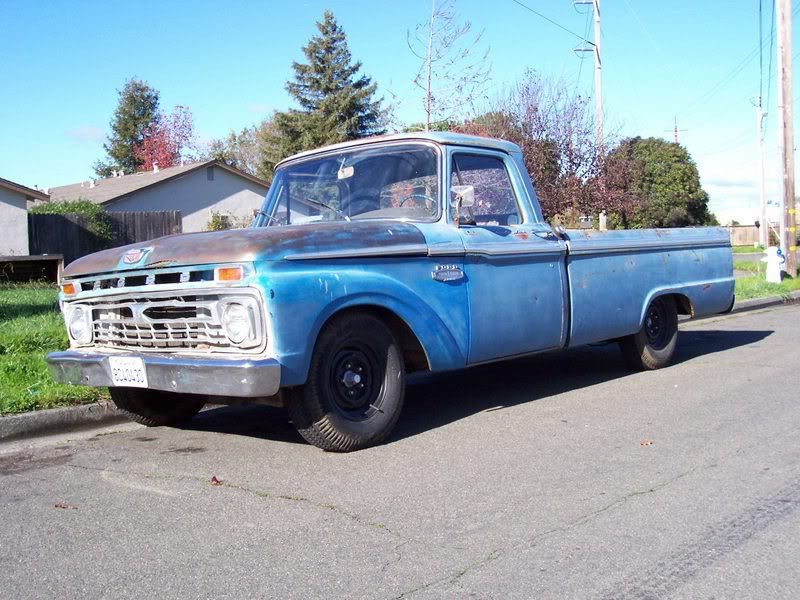
    shitytruck1

    Were it just me describing the above truck, I would say it was a shitty looking blue Ford. That’s being subjective. Someone else, probably the owner, would not describe the truck as shitty. She’d say it was in the process of being restored, blah, blah, blah.

    A journalist is trained to describe the truck as a 1960s-era blue Ford pick-up. Perhaps if it were relevant, the journalist would say the truck was missing hubcaps and featured various primered body panels. Which is to say, the journalist is trained to only say what is objectively true, the facts that two people standing side-by-side would agree as being “true.” (not getting into the whole existential question of whether or not we share the hallucinations of reality.)

    With me so far?

    So if you read an article in a newspaper, that’s what the reporter was trying to do. Communicate the facts of the moment (more facts can always come later as a story develops).

    Oh, but those facts are interpreted! That’s what you’re thinking. Not if the journalist is worth a damn, they are not. If a journalist has an opinion about a fact, that goes on the op-ed page, and is labeled as such.

    That’s what we’re taught. Our integrity is all we have. Our dedication to the truth is the viability of the profession.

    And sometimes, we’re all you as a citizen have. You think the politicians and CEOs are going to tell you the truth? Who is more likely to tell you the truth about factory working conditions? A guy making seven figures with an eye on his company’s market rating, or a journalist? You know it’s not the guy with a vested interest in the bottom line.

    You have to trust that there is someone out there working for you to deliver the truth. Journalist are your truth bringers. They are public servants (and not even paid as well). Most of us got into the profession because we believed in the nobility of the work, that it’s a cause.

    But newspapers are biased!

    Well, say you have two newspapers, and the editors-in-chief and publishers of those papers are ideologically opposed in every way. So say one paper is liberal, the other conservative, and the day after Trump got elected across their front pages the liberal one said, “OH SHIT,” and the conservative one said, “Hallelujah!”

    And then you read the stories that accompany the headline. The facts about Trump being elected — that he lost the popular vote, but won comfortably in the electoral college — should be the same. You’ll see a difference in maybe in who the reporters of each paper interviewed. Does that make the story untrue? No. Quotes from people are their opinion, but if you see it in a story it should be word-for-word what the person quoted said.

    Does the fact that the papers interviewed different people make the news fake? No. Does it show bias? Maybe, but a good reporter working on a news story is going to attempt to give you quotes from both sides of the issue. Again, that is what we’re taught to do.

    This is where media literacy and social responsibility come in. It is your fucking responsibility to know who is producing the news you consume. It’s your job to know if the publisher of your local paper is a liberal or conservative. That will change how they write a headline or frame a story, but even that won’t make the facts of the story itself change.

    If a reporter leaves out information so as to slant the story, then that reporter sucks. It’s like everything else. There are good ones and bad ones.

    Still with me?

    The profession has been fundamentally changed by the Internet. Any jackass with a keyboard can call themselves a journalist now. People read a Huffington Post article and think it’s news. People who like to write but didn’t learn about the profession, didn’t invest in the responsibility of the role of the journalist, can write whatever they want, publish it wherever and whenever they want, and consumers will read it thinking it’s legit …

    It is your responsibility to know the difference. YOURS. You take an active role in what you consume. You decide every day what you read, what you don’t. If you sit in your echo chamber and only read … sorry, what am I thinking. No one reads anymore. If you only watch things that support what you already believe, you’re shirking your civic responsibility.

    A journalist worth his salt will not ever want to be accused of reporting an untrue fact. Accuse me of getting your quote wrong? The hell I did. You need me to play it back for you?

    We had ethics classes in school, classes about the legalities of defamation and pedaling in falsities. We know our business.

    As a consumer, do you know yours?

  • I think probably since I saw Deadpool 2 two weeks ago, that goddamn Air Supply song keeps popping up in my head, and mostly at the …

    … I’m so lost without you …

    … worst times. Brushing my teeth. Trying to write something at work. Riding my bicycle. Driving the …

    … I know you were right …

    … car.

    Ugh. But it got me thinking about music from that time period. Song came out in 1980, genre was “soft rock.”

    Soft rock? The fu …

    Anyway, while I was thinking about it, I was trying to imagine the whole Air Supply thing, because that was a huge band at the time. I don’t get it. How did they attract a following? What were those concerts like? A bunch of people in pastel polos swaying with their big permed hair …

    … believing for so long …

    … You know, when I put it that way, it sounds like some sort of 80s cult gathering.

    Okay, but seriously, I know soft rock was a huge thing, I just can’t wrap my brain around the cultural conditions that led to that. There was good real rock at the time, and you were only a year from Kill ‘Em All. I can’t imagine a world where 20 and 30 somethings would be into Air Supply. I mean, it’s funny now in Deadpool, but it’s being used …

    … I’m all out of love, what am I without you …

    … ironically. Those people would be today’s Hipsters. … Ooooooh. Now I get it.That makes perfect sense.

    The past couple of weekends, the wife and I have been in a lot of restaurants and a disproportionate number of them were playing ’80s music. There were some good songs from that decade, but mostly, I think when people remember it fondly that’s just nostalgia fucking with them. Fuck nostalgia. It always hurts, never helps.

    … I can’t be too late to say that I was so wrong.